Episode 98: Try New Things | David Horne, Entrepreneur, Marketer, and Writer

David Horne talks about not being afraid to try new things.David Horne has his own marketing firm and he’s working on a new startup project called Fan Pack. They’re getting celebrities or people with a large internet following to join up with them and create packs of goods that are sent out to their fans. It sounds like a really cool product and service. He’s also going to talk about marketing in the interview. And the thing that we talk about that I want to focus on is don’t be afraid to try new things. Those who do experience success they try new things all the time they figure out what works and what doesn’t. Through that process they always learn things along the way.

David Horne is an entrepreneur, marketer and writer, living in NC. Most of his work over the last decade has been helping companies rethink and rework their marketing. I’ve been fortunate to learn from and work with a bunch of amazing and brilliant people. Currently, he’s running a modern marketing firm and recently launched a startup.

Zeb’s Take – Don’t Be Afraid of Try New Things

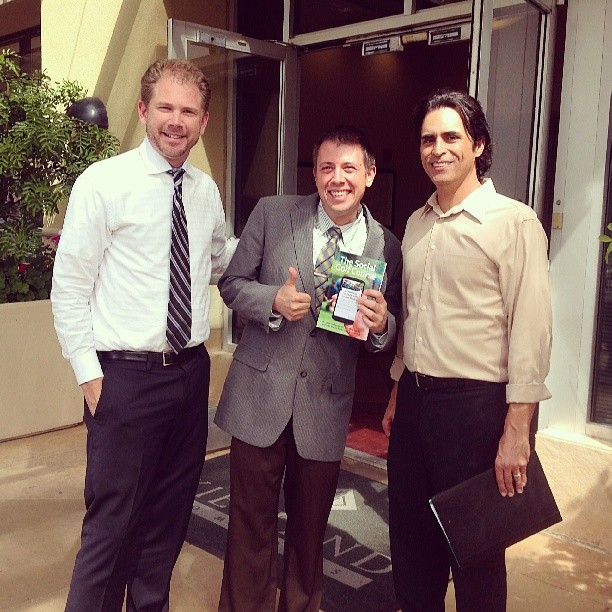
My friend Herby Fabius put David and me in touch because he knew we both like golf. David a professional golfer, and me who has always enjoyed the game and now I help market golf courses and I put together the book The Social Golf Course to try and help to promote the game of golf. I brought David on the show today so that he can share his marketing advice and also to talk about what it’s like to work on a startup and get that going. Especially with what he is doing now in Fan Pack.

During the interview he mentioned that he has began multiple startups and one of the things he still says is not being afraid to try new things because through that experience he learned so much.

For example, one of the things he did was they created that golf teaching card. What he figured out through that process was, he didn’t take into consideration the current customers. They had people that were paying for this product and service, but they spread themselves too thin trying to go after people who weren’t necessarily in that target market. That was the downfall of that startup of his.

They started this other one called Online Brand Camp. The big problem there was that they were treating it like a side project and it was something that needed to be the center of their business. He said they were treating it like a hobby and that’s the kind of results they got. They got hobby-like results. That’s another thing that he learned from that venture.

Now he’s working on this Fan Pack, I’m sure he’s learned a bunch and that he’s going to continue to learn. One of the things that successful people share all the time and that they talk about, many on this podcast is that they’ve experienced failures, but they don’t see them as failures. They see them as learning tools, or learning experiences. Where it didn’t work out and so now they are moving on to something else. David alluded to that in the interview: that he doesn’t look at these as failures, he learned a bunch from the process and it‘s only made him a better person. Smarter about business. Smarter about what he’s doing moving forward. I think that is the attitude you need to have if you are going to be successful down the road and obviously David has it and I think he gave some great insight today during the interview.

For those of you following us, sign up for the Defining Success Podcast Newsletter. We recently got a lot of people signing up, I’m excited about that. Thank you all for signing up. I want to thank Herby Fabius for introducing me to David. Herby is a great guy and a good friend. And thank you all for listening.

I want to encourage you all to go out there and find your success!

Find Out More About David Horne, His Marketing Firm or Fan Pack

Visit DavidHorne.me. It’s the best place to find out anything David has going on.

fanpack-logo-horiz

 Quotes

  • “Everything you do is marketing in some manner. Because customers buy from people they know, like and trust. Every interaction you have with someone either deposits trust or withdrawals trust and that’s kind of the name of the game.”
  • “If this existed and there were people that offered this that I liked, I would be a customer. That’s kind of where it started.”
  • “Don’t be afraid to take risks and test things out. If you have an idea try it and see if it works.”
  • “Take action, get a result. Refine it until you get a result you want.”
  • He says, “They weren’t failures in the aspect of – we didn’t learn anything, we didn’t make progress – they just didn’t reach the levels or goals we were trying to hit.”
  • “Don’t be financially successful at the detriment to your relationships.”
  • “Success is being valuable to your family, your community, and anyone you interact with.”

More From the Interview

David played golf in college and was able to turn pro afterward. He played on the mini tours for a while until he ran out of talent and sponsors. That’s when he got back into the marketing world. He was introduced to the marketing world early by his Uncle. He had been interested in marketing for a long time. He started helping brands with marketing. He landed at a software technology firm which got him into the digital marketing world. It was the earlier days email marketing and the beginning of SEO marketing, now content marketing. In 2008 he went out on his own either freelancing or with his consulting copy writing shop, that matured into the agency that he is a partner in today.

He’s always had side projects, try new things, things he’s been working on. This year he got serious about one of them which is called Fan Pack, which is a subscription site which connects fans with their favorite icons while supporting charities.

He says his marketing firm focuses on strategy and specifically how digital marketing fits into that. They do anything that falls into the web category from design to front end development, content creation, paid and organic search marketing, and social marketing.

“Everything you do is marketing in some manner. Because customers buy from people they know, like and trust. Every interaction you have with someone either deposits trust or withdrawals trust and that’s kind of the name of the game.”

He says, today, there’s so much transparency and information to learn what it is your customers want and then you build stuff for them. That kind of has the marketing built in.

Fan Pack is a way for fans to connect with their favorite artists, athletes, entertainers, thought-leaders, ect. while supporting charities. His business partner was his best friend from college. When they did get together they would always discuss the different things they were fans of and how they were introduced to them by people who influenced them. They thought, what if we can create a premium experience where fans, because everyone is a fan of something, whether that’s a product, company or sports team, musician. I just wanted to create a platform to be able to do that so fans can have that experience with people they like.

He says, “If this existed and there were people that offered this that I liked, I would be a customer. That’s kind of where it started.”

He’s learning how to run a product business, in the past all his companies have been services that supported product businesses.

With Fan Pack he says they’re learning. There’s a lot of improvements and we’re working on version 2 right now that will go live in the fall. David is excited about it because it will have more flexibility and the potential for anyone that wants to be a contributor to be a contributor. Anyone that wants to have a subscription service to offer their fans will be able to do that.

Fan Pack is not David’s first startup venture. His previous three all failed. He says he learned a lot through out those experiences.

He encourages everyone to try new things without fear of failing, “Don’t be afraid to take risks and test things out. If you have an idea try it and see if it works.”
“Take action, get a result. Refine it until you get a result you want.”

He says, “They weren’t failures in the aspect of – we didn’t learn anything, we didn’t make progress – they just didn’t reach the levels or goals we were trying to hit.”

With the golf card, David says they didn’t focus enough on their core customer. They didn’t do a good job of honing in on the value they provided them and then finding the customers that wanted that. Instead they tried to reach all golfers everywhere.

David says, success is about continually getting better at bringing value to the community that you serve without sacrificing family or self.

“Don’t be financially successful at the detriment to your relationships.”

Spiritually, emotionally financially, those three things staying in progress as well as continually getting better at serving and bringing value to your community. Success is being valuable to your family, your community, and anyone you interact with.

He says success is a moving target. It’s not something that just happens once. It’s a moving thing that you try to be in step with.

Facebooktwitterlinkedinmail

Episode 97: Giving Recognition | David Long, Founder of My Employees and Author of Built to Lead

David Long talks about the importance of giving recognition.David Long is the author of Built to Lead – 7 Management R.E.W.A.R.D.S. Principles for Becoming a Top 10% Manager. During this interview he talks about his R.E.W.A.R.D.S, an acronym, and how you can apply that to make your employees much more effective. The thing I want to point out in this interview is David’s idea about giving recognition to people you work with or who you work for and the advantages of doing so. David has a lot to say, he’s a really interesting guy and I think you’re going to enjoy the episode.

David Long is the author of Built to Lead – 7 Management R.E.W.A.R.D.S. Principles for Becoming a Top 10% Manager. In the book, he talks about what it takes to become a Top 10% manager in your company, and show YOU exactly what he did to accomplish that impressive feat in THREE DIFFERENT INDUSTRIES!

The “​​7 Management R.E.W.A.R.D.S. Principles” in Built to Lead are “get-in-the-trenches, no-holds-barred” ​lessons of how, ​specifically, to truly become an amazing manager. David tackles, head-on, the lies you’ve been told about how to reach the top in your career, and shows you what REALLY WORKS​!​ ​These are ​concrete​,​ ​foundational principles that will ​change your life, not only ​in your business career​…​ but ​in your ​personal life​ as well!

Zeb’s Take – Giving Recognition

It was a blast chatting with David today. He has so much information to give. You can tell that he’s lived an interesting and fulfilling life by helping his employees and really building them. Taking them through his process, how he cultivates, gets people excited about the work that they do. He said he has a treasure chest full of little goodies and things people have given him over the years that say what an impact he’s had on their lives. That has to be very rewarding.

One of the things that he brought up that I thought was extremely interesting was the idea of giving recognition, and recognizing people in a scenario. That’s one of the things I’ve found predominantly why people decide to get involved in particular organizations or groups that are doing things. It’s because of the recognition you give. As leaders and managers, giving recognition for a job well done is extremely important and critical for the success of a business, especially if your business relies on getting others involved.

From my experience, I have a small business I don’t have any employees per say, I have hired people from time to time, but from my experience from being a leader in my local chamber of commerce, I’m the head of the membership committee. Trying to get people to do things is not the easiest thing to do, especially when people are volunteering their time. What I’ve noticed, this is a recent revelation for me, is the more recognition I give to people the more likely they are to do things when I ask for things to be done. I think they genuinely want to do the things that I’m asking during the meetings, but I think when I give recognition for the stuff that they have been doing I get much more buy in to the work that I’m doing. It can be verbal, in my case it is. What David has created is a way to not just give verbal recognition but also to give monetary recognition, or in the form of plaques, or in the form of taking people out to lunch.

When you are trying to organize people, or trying to get people excited or involved in something whenever people do something above and beyond, or even sometimes within their work capacity, but they do a good job at it, is recognizing that is going to help you build your brand, build your business, build everything that you are trying to accomplish and you are going to have more people willing and eager to help you with that process.

If you do find yourself in that managerial role or that leadership position I think you’ll be able to take a lot away from this interview with David.

Reach out to me, send an email to Zeb@WelbornMedia.com. Ask me questions, let me know if there is anything I can help you out with, shoot me an email and I will be happy to answer them for you.

Lastly, go out there and find your success!

Find Out More About David and His Book

Find his book ‘Built to Lead’ on Amazon. You can download chapter 4 on education of his book, visit the website Top10Manager.com. Go to MyEmployees.com for his employee recognition programs. Reach David at DavidLong@Top10Manager.com.paperback

mainlogo

Quotes

  • “I’ve been in management for over 35 years in my life. I know what I’m doing. Over three quarters of our employees are there because of other employees telling them how much they love working at our company. I can’t think of a better endorsement than that.”
  • “If the manager is not worthy of respect, they are not going to get it. If the manager doesn’t seem to care about their employees then they will not care back in return. There will be no loyalty, no bond between them.”
  • “You need to constantly read and learn new things and make yourself more valuable.”
  • “Focus on adding value to people’s lives. Focus on touching people’s lives where you help make them better. That’s where I get my satisfaction from.”
  • “It’s nothing big. It’s just the time. It’s the effort. It’s letting them realize that you totally care about them. That’s what matters.”
  • “People just telling me how much I meant to their lives, my goodness man, you can’t put a dollar on that. That’s success.”

More from the Interview

David lost a job he had in retail over a disagreement with management. That’s when his life went into a tailspin. He was successful at that job. He assumed he would be able to get another job making just as much money. He went through 7 jobs in 3 years. It was a dark time in his life and he’s grateful for having his wife and 3 kids to help him through.

After 2 and a half years of anguish his father called him and suggested he move back home with them. Davids response, a sarcastic “Yeah right Dad!”

One year after that, his father called asked if he was any better off now than he was the year before. David answered, “No.”

They had just sold their house, that they almost lost to foreclosure. They weren’t going to be able to pay rent the next month so they took his dad’s offer and moved in with the folks.

His best friend’s mother remembered that David had engraved jewelry while he was in college she wanted to help him out and gave him an opportunity. There was a jewelry store closing nearby, she told him to check it out to see if they had any equipment, and if he thought it was worthwhile, she would buy the equipment, they would go into business and split profits 50/50. He thought that was a good idea and went for it. At first it didn’t really pan out.

He was also working at Circuit City. He noticed the plaques they had on the wall, and asked his manager how much they cost and was surprised by the price. He asked if he could create some samples to replace the ones they were selling. The manager was impressed with them. David sold them to him and a to a few other Circuit City stores.

He was still interviewing for other jobs. A potential job fell through. He remembers being in his car on the way home. He had those sample plaques that he made in the trunk of his car. He saw a real estate company on the side of the road and he just pulled in. David was allowed to see the person in charge of employee recognition. He made a deal with the guy and got a check right there. He went to another real estate office and made another sale, got another check and he never looked back. He was in business.

His company is My Employees is in the top 1% of employee recognition and engagement companies in the US and Canada. He says, they’ve grown by an average of 20% every year for the past decade. He has 45 employees now, and they are hiring a few more. They work with Walmart, Target and many more.

He says, “I’ve been in management for over 35 years in my life. I know what I’m doing. Over three quarters of our employees are there because of other employees telling them how much they love working at our company. I can’t think of a better endorsement than that.”

“If the manager is not worthy of respect, they are not going to get it. If the manager doesn’t seem to care about their employees then they will not care back in return. There will be no loyalty, no bond between them.”

David uses the acronym R.E.W.A.R.D.S. in his book.

R – Reconnaissance: know who is on your bus
E – Education
W – Winners Emerge: people will take on leadership roles and responsibilites
A – Attitude: if you have a bad attitude you have a very bad foundation
R – Recognition: it is very important that people realize what you want to see more of
D – Duplication: training your second tier of employees to be ready for opportunities
S – Success: success is different for everyone, it shouldn’t be just about money

For recognition at his own company David gives out awards every month to top performers in every department. He takes them out to lunch. They do activities together, see movies, race go carts, while on the company clock. He will take them out to a nice brazilian steakhouse for dinner. Once a year he takes a select few on an all expenses paid Champions trip, sometimes they go on cruises, we go out west to the Grand Canyon & Zion, the Dominican Republic. In addition to that, they also do recognition on a daily basis to motivate their employees. When they hit a certain number they get a reward from the cookie jar.

“You need to constantly read and learn new things and make yourself more valuable.”

“Focus on adding value to people’s lives. Focus on touching people’s lives where you help make them better. That’s where I get my satisfaction from.”

He says all managers can give employees recognition. It doesn’t have to take a lot of money. You can go to their office and tell them they did a phenomenal job getting that report done early. That right there is more that most managers do. David also says it’s important to be specific. He warns, “Don’t insult someone’s intelligence either.” Put in some effort.

“It’s nothing big. It’s just the time. It’s the effort. It’s letting them realize that you totally care about them. That’s what matters.”

“People just telling me how much I meant to their lives, my goodness man, you can’t put a dollar on that. That’s success.”

David shares about one of his other passions. Him and his wife funded a documentary called Still in the Fight. It profiles 3 wounded warriors, one of which just received the congressional medal of honor. It can be bought on Amazon. All of the money (besides expenses) goes directly to 4 military charities.

David also plans to contribute some of the sales of his book to go to charity as well.

Facebooktwitterlinkedinmail

Episode 96: Outside Your Comfort Zone | Niveen Salem, Multi-Level Marketing and former Chevron Executive

Niveen Salem talks about getting outside your comfort zone.Niveen Salem is in the MLM marketing business, so the multilevel marketing business. During the interview she talks about personal development and how important that is to success. You know improving yourself, making yourself better, and she’s going to talk about getting outside your comfort zone and more in the interview today.

Niveen Salem is a former Chevron Executive and a current business owner who is passionate about transforming people’s lifestyles and helping them have control over their destiny. She is now working globally with entrepreneurial business minded people who are motivated to create financial independence and time freedom. She coaches and trains people to create passive income which allows them to build their dream lifestyle and not being traded as a commodity in the corporate world anymore.

Zeb’s Take – Going Outside Your Comfort Zone

I had a great time chatting with Niveen today. I mentioned that I met Niveen at the Chino Valley Chamber of Commerce and her and I have become friends. We interact on a regular basis through social media even though we don’t see each other as much as we used to.

One of the things that Niveen really highlighted in the interview today, she talked about the importance of personal development and how that leads towards success. She mentioned that she overcame a lot of obstacles and a lot of self-doubt and she went outside of her comfort zone to accomplish and do things that she really didn’t feel comfortable with in the beginning. Now she is much more seasoned and it has led her down a path of greater prosperity and she feels much more comfortable in her skin. In doing so that has made her much more comfortable in offering value and services to others.

She really spent a strong focus of her skill set doing things that would, one push her out of her comfort zone, and two would also offer the ability to develop herself to become better at the skills she needed to acquire her new clients, her new businesses, her new customers, and then use that in future endeavors that she is going to be on to in the future.

Niveen had a lot of great points and I need to mention that she really did me a favor today. The appointment I had today cancelled and I knew she was doing cool amazing things, so I reached out to her on Facebook and asked her to interview right now. Within a matter of minutes she was with me on the phone and she did a fantastic job. If you haven’t met or connected with Niveen, definitely check her out.

Check our Facebook page let us know what you think of our podcast and let us know what you’d like to hear on The Defining Success Podcast.

Go out there and find your success!

Find out more about Niveen Salem and her Products

Visit NiveenSalem.com.
To connect with Niveen visit Facebook.com/NiveenSalem2

Quotes

  • “The main products that we’re always selling with networking marketing is lifestyle. We’re teaching people how to lead a better life, be healthier with the physical product itself, but live a different lifestyle.”
  • “What I did not anticipate was the stigma that is existing in this industry. Now after being in the industry for a while, after reaching success, and having a team and dealing with very professional people, I understand why. Because a lot of people deal with this business in a very unprofessional way. They are not being real. They are not being sincere about it.”
  • “Personal development is a huge milestone in reaching success in any business.”
  • “Any business that you run, you have to be professional about it otherwise you never succeed. I don’t care what you do.”
  • “In any business you need to look at 5 major key factors of success: the company, the products, the trends, the compensation plan, and the training. If the first 4 are there, but you lacking good training and leadership, you’re not going to do well.”
  • “This business is all about vision. You have to dream big and you have to see the really big vision behind this.”
  • “Hone your skills. Learn the skills, hone them, and be professional. if you are able to do these three things you are in the business for sure.”
  • “If you are thinking in terms of finances — wait, it will happen. But it’s not going to happen without a passion and without growing yourself first.”
  • “I always drive on a daily basis to be consistent, to learn the skills, and to be professional in all my dealings with people around me.”

More from the Interview

Niveen was a corporate executive at Chevron and she loved working there that it was a global company. She made good money, but it took up too much of her time. She wasn’t able to spend enough time with her girls. She had to quit. She decided to start her own eCommerce business in the wedding industry. It was another struggle and she lost a lot of money. After that her friend introduced her to a new business model. She works to transform people’s experiences/people’s lives, she works from home, and she works globally.

At Chevron she was able to work her way up the ranks. Working at a company like that can be a very demanding job. Many days she would go to work at 6 in the morning and get home just before her kids went to bed. She also did not have any luck finding a good nanny. She went through 13 nannies in one year and she says, “It was really hard.”

She couldn’t stay like that for too long, she had to do what she had to do. Family comes first.

Niveen can’t just stay home and not do anything, she’s a business person. When her kids started going to preschool she had more time, especially in the morning. She knew she wanted to work, but she knew she didn’t want a full time job, because she probably would leave it again. She was looking for from home work opportunities. A friend of a friend of her’s ran a baby shower website from home and she thought it was really interesting. She thought she could do the same thing and work in the wedding industry. It took her about 6 months to do all the research, find the wholesales, shippers, learned the ecommerce platform. She did a ton of work just to get the business going. She spent much of her money on her SEO efforts. She outsourced to handle the large workload.

At first she was very sad to close the business, but now she’s happy that she did because it wouldn’t have worked out for her very well. She can just imagine herself right now sitting and taking orders all day long. She struggled with that business very much, she did everything possible to make it work and she couldn’t even break even. After a while she entered the third stage of her life, her current business came into place and she decided to close her wedding business.

A friend of hers introduced her to the networking marketing industry. When she worked at Chevron she lacked time. When she was running her wedding business she had the time but she did not have the money. She spent some time wondering what do people do to leverage time and money. She considered real estate, but it really takes money to buy properties and be able rent them.

She says, “All my thinking was how in the world can I get some passive residual income. That thought kept lingering in my mind but I didn’t have an answer. I didn’t know about networking marketing at the beginning. When my friend introduced me I said no because I thought I’d be selling products and, guess what, I was already selling products.”

6 months later her friend told her to sit down and see how the business end of it works. She told her that she could develop it strategically in more 50 countries, it’s a global business. You can help people transform their lives and their experiences along the way. She learned how to do it, she learned about the steps. She saw the business end of it and she loved the compensation plan. She says, “It’s been a journey of it’s own.”

She works with anti-aging products. Including nutrition, things for energy, weight loss, cutting-edge technology when it comes to anti aging from the inside out. She says, “The main products that we’re always selling with networking marketing is lifestyle. We’re teaching people how to lead a better life, be healthier with the physical product itself, but live a different lifestyle. So this is, really when I look at this business part I would say it’s lifestyle, that’s the product. But the physical product is anti-aging and nutrition.”

There are really good people, incredible good people in this industry. She says, “What I did not anticipate was the stigma that is existing in this industry. Now after being in the industry for a while, after reaching success, and having a team and dealing with very professional people, I understand why. Because a lot of people deal with this business in a very unprofessional way. They are not being real. They are not being sincere about it.”

Her business allowed Niveen to make great relationships and friendships. She says, “Without this business I would not have stepped out of my comfort zone and be there.”

“Personal development is a huge milestone in reaching success in any business.”

“I look at myself years ago. I look at myself now. I was an extremely shy introverted person. I couldn’t really speak to anyone. Now, I go to meetings and chambers and I talk to people on social media and here I am doing a podcast with you. These are part of the personal development successes that I’m achieving on a daily basis.”

Niveen creates videos and puts them out online. She does this because she realizes social media is help people know, like and trust you. In person it’s easier to build that know, like and trust. Online it’s more difficult. Videos will help people get to the point where they know, like and trust you.

“Any business that you run, you have to be professional about it otherwise you never succeed. I don’t care what you do.”

“In any business you need to look at 5 major key factors of success: the company, the products, the trends, the compensation plan, and the training. If the first 4 are there, but you lacking good training and leadership, you’re not going to do well.”

“This business is all about vision. You have to dream big and you have to see the really big vision behind this.”

Niveen says, if you are thinking about your personal gain, then this business is not for you. Of course you are going to gain personally out of it, of course. It’s all about that time and financial freedom. But you have to think about other people this business is about transforming people’s lives and lifestyles and experiences and everything.”

“Hone your skills. Learn the skills, hone them, and be professional. if you are able to do these three things you are in the business for sure.”

She says, being consistent, seeing the vision, learning the skills and being professional to sum it up.

“Success for me is, number one, being very passionate about what you do and growing yourself to the level you want to be. As simple as that. If you are thinking in terms of finances — wait, it will happen. But it’s not going to happen without a passion and without growing yourself first.”

“I always drive on a daily basis to be consistent, to learn the skills, and to be professional in all my dealings with people around me.”

Facebooktwitterlinkedinmail

Episode 95: Delivering the Wow | Corey Poirier, professional speaker, radio show host and author of the Conversations With book series

Corey Poirier Delivering the WowCorey has done so many cool things and he’s interviewed thousands of people. He used to be a professional comedian and now he’s a professional speaker giving speaking engagements to corporations and to people who are looking for a little bit of motivation and inspiration to go out and do cool amazing things. One of the things that Corey brought up in the interview, which I thought was super cool, was he called it ‘delivering the wow’. He made some comments about some organizations that are often delivering the wow and do some things that are super cool that get people talking about them. That’s what I want to focus on at the end of the episode today: working on delivering the wow. Enjoy!

A Canadian Professional Keynote Speaker, Entrepreneur and Corporate Customer Service & Sales Training Specialist, Corey Poirier is publisher of Island Business News, author of four acclaimed books in the Conversations With series, creator of three audio programs and the host of a new radio show entitled “Conversations with Passions,” a variety show that features interviews with world-wide leaders such as David Suzuki and Jack Canfield.

Zeb’s Take – Delivering the Wow

Corey had a lot of insights and he’s done a lot of really cool things. Being a stand up comedian in and of itself is probably a pretty difficult task. You have to overcome a lot of hurdles about getting in front of people and putting yourself out there like he did. I know for sure that has led him to do some things that are outside of the box and have pushed him outside of his comfort zone. It’s very cool that now he’s speaking to businesses and organizations about stepping outside of their comfort zones. I’m sure the his speaking engagements are always well received and that he does a great job with those.

One of the things he brought up in the interview today was, he was talking about delivering the wow. I think that’s a cool thing for any business to do. There’s a lot of ways that businesses could go about doing that. I just want to touch on it, because I think it’s so important for a business not just to do what you say you are going to do, but offer something that really offers that wow factor. Make people go Wow, that’s something that’s really nice to do. Businesses need to think about delivering the wow, and how they can do that within their business.

He shared one example from Disneyland. Anywhere in the park, if someone drops an ice cream cone, any employee can go and get them a fresh ice cream free of charge. That’s something that’s pretty cool. That’s delivering the wow. Where most organizations, they’re looking at the bottom line, they say that doesn’t make sense. But that’s something where they are delivering that wow factor which gets people to come back more and more often. Another example would be if a child was waiting to get an autograph from one of the characters but they ran out of time. An employee could go and get that signature for them and deliver it to their hotel or something cool like that. Those are the type of things that really leave a lasting impression with people.

I think in business sometimes people get caught up in, “What do the shareholders want? What is this going to be worth? What is the value of each little thing that we are doing.” But when you do those cool things, those are things that can’t be measured but can lead to amazing success for an organization.

I think about my tutoring business. One of the greatest decisions we ever made was offering our Share Your Passion Scholarship. We just did something that we thought was cool. We offered a scholarship for students who could write an essay that would talk about what they are passion about, why they are passionate about it and how they are using their passion to help others. By doing that we got a lot of word of mouth from people in our community, from counselors in high schools, that just really expanded our business greatly. The real reason why we wanted to do it, we just wanted to do something cool.

I think that if we leave those things for the world; we do cool things for the world, we leave those wows for the world; that one the world is going to be a better place, and two that we will be better served for it.

I had a great time talking to Corey, it looks like we’ll have strong collaboration moving forward. we talked a bit after the interview. I want to leave you with one more thing and that is to go out there and find your success!

Find out more about Corey and his Projects

Visit ConversationsWithPassion.com to find out about his show and hear the show.
Visit CoreyPoirier.com, his speaking related website.
Connect with Corey on social media using links from either of those websites.
Interestingly if you want to find out more about Corey, check out his first music video, Your Jacob on YouTube.

Quotes

  • “No matter where you are at in today’s global world you can be highly successful and you don’t have to leave the place that you love to do it.”
  • “We’re in an information heavy/wisdom light world, so it means ciphering through the information so you can get to the knowledge that matters.”
  • “Super achievers realize the importance of and know how to be absolutely all in.”
  • “These high achievers are living their purpose and living with passion.”
  • “They don’t necessarily love everything they do, but everything that they do is for a bigger purpose, and they are doing it passionately because they are passionate people and where that started is because they found their passion and that is how they are living their life.”
  • “I made my business fit into my life rather than the other way around. To me success is being able to know everyday that I made a difference, but at the same time, I made a difference doing what I love.”
  • “I believe that I’ve impacted a lot of lives and I believe what I am doing is worthy. And I actually really like me.”
  • “I’m trying to be awesome everyday.”

More from the Interview

Corey has kind of a neat starting point, different from the rest of our guests. He started his journey as a stand up comedian. It’s a strange entry point for entering the speaking world. He feels that stand up comedy prepared him well for his career. He really does a lot of storytelling, even the message he shares through the written word.

He spends most of his time as a professional speaker. He has companies bring him in to do motivation talks, educational talks, all that kind of stuff. They bring me in to share a powerful message with their attendees, or staff members, their association. Those messages can be anything from how to find your passion in life to what are the common traits of super achievers, to how do people define success and how can you make that work in your life. He also has a radio show, and a newspaper and other areas where he shares those messages.

One of his speaking engagement topics is Standing Ovations from Every Customer. He actually turned the speech into a book a couple years ago. It’s a fictional tale of a stand up comic teaching a business person how to get standing ovations in their customer service role or the customer service experience that they create.

There are 4 steps to get a standing ovation from every customer. They sound basic on the service, but they are not as basic as they sound to put them in play.
1. How do you make it about your customer?
2. Involving the customer.
3. Being in the moment.
4. Delivering the wow.

One of the little things that you could do that are worth their weight in gold that in some cases may not cost a thing, that make the person go, “Wow, I never saw that coming.” It’s the thing they didn’t even know they need yet and you’ve given it to them.

Companies that are delivering the wow regularly are companies like Apple and Disney. Apple, solving problems with your phone that you didn’t even know you had in the past. Disney, in their training they teach employees to recognize that if visitors are wearing jewelry brought from Disney to tell them, “Welcome back to Disney.” That’s something Corey heard from a trainer who does customer service and training sessions at Disney.

At Disney if a child drops an ice cream cone anywhere on the Disney grounds any employee is empowered to get them a new ice cream cone. Or if they waited for an autograph from Pluto but they were too late. An employee is empowered to get that autograph for them and leave it for them in their room if they are staying at a Disneyland Hotel. All those things are them delivering the wow.

Another one of his speeches is Atlantic Canada Matters (Inspirational). It’s a bit more geographically and comes from one of his projects called Conversations With. They put out 5 books in a series where they profiled high achievers in different regions of Atlantic Canada. It’s about how you don’t have to move away to be successful. These interviews prove that that’s not the case. They demonstrate that you don’t have to move away from this little place to actually make an impact.

It can be customized to any region or any company or any place, because really at the center of the talk itself is the idea that no matter where you are at in today’s global world you can be highly successful and you don’t have to leave the place that you love to do it.

“No matter where you are at in today’s global world you can be highly successful and you don’t have to leave the place that you love to do it.”

One of Corey’s most popular sessions these days is what he calls, Signs of Super Achievement. He’s interviewed over 2,500 people at a high achievement level. So he’s been able to do a sort of research project. He’s deciphered the things that they’re doing differently that allows them to stand out. The talk is revealing those strategies. One of those things is that they are willing to expand their comfort zone, so they can continue to step outside and grow their comfort zone over and over so they can become the best version of themselves.

Some of the other things that super achievers do is that they are lifelong learners, they realize the importance of and know how to be absolutely all in, and the number one trait is that they are living their purpose and living with passion.

“We’re in an information heavy wisdom light world, so it means ciphering through the information so you can get to the knowledge that matters.”

“Super achievers realize the importance of and know how to be absolutely all in.”

“These high achievers are living their purpose and living with passion.”

“They don’t necessarily love everything they do, but everything that they do is for a bigger purpose, and they are doing it passionately because they are passionate people and where that started is because they found their passion and that is how they are living their life.”

Corey says, for these three traits the person doesn’t have to be born in any certain area in the world, doesn’t have to come from any unique background, there’s no stigmas or anything associated with achieving these three. Anybody from any point in their life can start today and bring these three things in their life.

Corey shares a story that he likes to think of when he’s having a bad day. There was a girl who had seen him on tv when she was younger and she remembered him. Years later when she found out Corey would be speaking nearby she made sure to attend. A while afterwards she contacted him and told him that the talk he gave was the kick in the butt she needed. She decided to go back to school, from there she got a job and at the time she talked to him she was the manager of a few car rental locations. She told him that she never really thought a future like that was possible for her, but that kick in the butt was just what she needed to get her life going.

Corey has learned a lot from his failures, which make them worthwhile. One failure that really affected his life was from his very first stand up show. He was told that he would be performing on stage that night and he was not prepared. He decided to face fear head on so out of a few comics he stood up and went first. The first thing he did was tell the best joke he had ever told, it was met with dead silence. He told his second best joke and got the same response. The organizer of the show motioned him to the corner of stage and said, “You idiot, you have to wait until I turn the mic on.”

Corey took lessons away from that on so many levels. Including that sometimes in business we’re ready to share a message, but we haven’t turned our mic on yet.

Right now he is very excited about a compilation book project he’s working on. It’s called share your message with the world. It is Corey and 26 other authors, they are each sharing a story or message that in some ways changed their life. Corey’s chapter is about living YOUR bucket list. Rather than live society’s bucket list, do all the things that society wants you to do. Rip that bucket list apart and make sure you do all the things that you want to do. Dont try to live someone else’s bucket list. Corey is excited about the project and all the passionate people involved.

The most funny interview Corey had was with Robin Sharma, author of 11 books including The Leader Who Had No Title and the Monk Who Sold His Ferrari. When the interview was scheduled he got a horrible toothache, but they had already rescheduled. In the interview he was trying to ask short questions and was sipping lots of water to soothe his toothache. Then he had to go to the bathroom pretty much the whole time. At the end it came out alright, but there was a lot of obstacles for him, looking back on it now he remembers how funny it was.

When he first started interviewing people he made a list of 100 people that he would want to interview. His friends who saw his list told him he’d be lucky to interview 10 of the people on the list. Now he’s interviewed 93 of those people. Including his interview with Jack Canfield. The day before his interview Jack was on Larry King Live and the day after he was on the Oprah Network. By sharing the benefits of his show he was able to get more interviews.

“I made my business fit into my life rather than the other way around. To me success is being able to know everyday that I made a difference, but at the same time, I made a difference doing what I love.”

“I believe that I’ve impacted a lot of lives and I believe what I am doing is worthy. And I actually really like me.”

“I’m trying to be awesome everyday.”

Facebooktwitterlinkedinmail

Episode 94: Don’t Dwell on the Past | James Maioho, Author of Winners Give Up!

James Maioho Tells Us Successful People Don't Dwell on the PastJames Maioho is the author of Winners Give Up! which is a little play on words there. I think most people would stay that winners don’t give up, but in this case it’s giving up the baggage or things that you are holding on to that are holding you back from achieving the things you really want in life.

James Maioho is the author of Winners Give Up! Inspirational insights into the habits of accomplishing your personal goals. The book was a labor of hope and commitment to doing the things necessary to climb back from the abyss. It is the fulfillment of an inner need to inspire others who also want to be “the best possible version of themselves.”

Zeb’s Take – Don’t Dwell on the Past

It was great talking with James about his book and some of the philosophies that he has on life. Actually he and I share a similar path in that we both experienced this kind of traumatic period in our lives where we were in a really interesting place. I kinda described it as I was kind of lost I didn’t know exactly what I wanted to do. I’m not sure if he described it in the same way but it was similar circumstances. So I can definitely relate to what he was going through and how he worked to overcome that. The way he worked to overcome that was by providing value and helping other people. That’s exactly what I try to do as well.

One of the things that he talked about in the interview and what he wrote his book on, Winners Give Up. Which is a little bit counterintuitive but I do understand exactly what he’s trying to get across there. Which is that the most successful people learn to let go of the past. They learn to let go of that baggage and look forward and take action in the present so they can go on to achieve things in the future. They don’t look forward to the future. They don’t spend time dwelling on the past. They live in the present, planning for the future, and taking action on things in the present so that it impacts the future. So that it can be the future they want.

Sports is a great analogy for anything in life. One of the things I’ve noticed in the sports world, is that failure is constant in sports. In baseball for example, even from one at bat to the next. You can hit a homerun in one at bat and strike out at the next one. But if you dwell on the strikeouts you’re not doing yourself any favors. You’re not planning for the future, you’re not getting better you’re just dwelling on what happened in the past and that’s a strategy designed for failure.

I would like to encourage all of you to take a moment to think of those things that are holding you back. Those things that you are dwelling on that aren’t serving you for your current and they’re not serving you for your future and let those things go. It really does no good for anyone.

I can remember specifically during that dark time in my life, literally, I would just sit there and I would kind of obsess over the fact of how I was wronged and things were going against me. Once I realized that that wasn’t doing me any good and I took steps towards something that was going to make a positive impact and have a difference my life opened up and became so much better. I’d encourage all of you if you are struggling, or it’s a tough time in your life, or you’re not sure where to go take some steps to do something that’s going to impact your future for the better by helping other people. I think that’s a great step to take and you can just start going from there.

Thanks for listening! Sign up for our newsletter! A monthly email that shares about our guests our interviews and also little tid bits or information about that stuff that I’m up to, and maybe even some things that you can take action on. Now I want to encourage all of you to go out there and find your success.

Find Out more about James Maioho and the book Winners Give Up

Visit WinnersGiveUp.com or to bouce business ideas or things off James go to MadkoGroup.com. He says he’ll answer any questions for the people that care to contact him. If he has time he’s happy to do it.

Winners Give Up! by James Maioho

Quotes

  • “I had to do something positive. I had to try to do one thing, take one step forward in a positive direction to make my time worthwhile instead of wallowing in a pool self pity.”
  • “If you want to be a writer you have to write in a manner that is about something, one that you have passion about, two that you have some sort of knowledge and believe that you can be of value to other people with really no expectation of any sort of fiscal return or anything. That’s the mindset I would have going into it.”
  • “My biggest mistake has occurred when I didn’t do the preparation and the work that I needed to do and had the wrong attitude in pursuing my goals.”
  • “One, find out what your heart of hearts desires, what your true passion is and whatever that is pursue that with relentless vigor regardless of what anybody else thinks about how you’re doing it and what you are doing. Do everything, every action that you take, every breath that you make, try to do it for the benefit of somebody else. Those are the two things.”
  • “My drive right now is just to try to share whatever or little experience that I have in a way that benefits somebody else, if they’re hurting, or if they want to get from point A to point B, or things aren’t working for them or whatever the case may be.”
  • “Everybody has to be brave enough to define their own success on their own terms.”
  • “You have to define success in some sort of way that incorporates the happiness of yourself and the happiness of others.”
  • “You can’t feel bad about dropping your bad baggage whether it be thought processes, guilt resentment, the way you think in business situations, putting other people first, negative people, negative family members, any of those things. All of that stuff has to go if you want to get to whatever your goal is. You really have to dig deep and be honest with yourself to define your own success.”

More from the Interview

James says his career path is not linear. He’s had several different careers or different components to my career. He first went to school in Michigan on a music scholarship he wanted to be a musician. He ended up getting his degree at a school in California. When he was sitting in a studio just about to get his degree. He had a conversation with a guy who was a pretty successful studio musician. That guy said that he didn’t make any money, so if you can do something else, you should do something else.

James took that, went back to Michigan and got his business degree. He was selling electronics, clothing, he ran a tire store while he was going through school, he sold chimney sweeps. He went to work selling only to high asset high value clients, bonds. He got all his SCC licenses and started learning the business. He says, “Except when you are 23 or 24 years old and green as can be. In that world, in that market, nobody is going to give you $100,000 because you don’t know what you are doing. Even if you know all the ratios, all the numbers, all the charts, and got those things memorized backwards and forwards, you don’t have any experience or real credibility.”

Eventually he learned local manufacture and at construction, he started working with Caterpillar and learned how to do territory management, client based selling, large asset value setting. Then he migrated out of that went into a family business, his ex wife’s family’s business. He got the opportunity to learn about fabric manufacturing, importing, direct marketing. This was a company with very large house file list management, a large call center, lots of fulfillment. He got all kinds of experience with direct marketing, a completely different type of selling than just territory management. All kinds of marketing to support it.

From there James went to work for a private consulting company out of Chicago and was a turnaround consultant. He would take troubled businesses and teach management skills, inventory skills, the business of running a business really. “You walk into a business and you have to shift the paradigm of thinking of an organization, because if it’s struggling, it’s struggling for a reason. Normally the reason that it’s struggling is because there’s bad decisions being made.”

With that job, he had young children, but for work he was on a plane 5 days a week. He said it was a fascinating job and he had a lot of success.

That brought him up to the point when he started writing, doing articles, and putting out the book and those things.

During his path there was a point in time when James’s decision making was poor in his personal life and professional life. He was unemployed. He was travelling back and forth to see his kids. For a time he says, “I could not do one thing right for a certain window of time in his life.”

His assets had evaporated, the separation from his ex-wife was unpleasant, it was a bad time personally — financially, professionally and emotionally. He moved back to his dad’s old family farm and in Michigan the job market was terrible. He couldn’t even get a job at McDonald’s. He’s convinced it was partly because of his attitude at the time. “My thinking and everything was so negative. Almost like an abysmal downward spiral. I had to do something positive. I had to try to do one thing, take one step forward in a positive direction to make my time worthwhile instead of wallowing in a pool self pity. So I started writing the book, and the first few chapters, the first little bit of it, th idea of it was just like pulling teeth. But once I started going I started to have a paradigm shift of my own. Once I started accepting some of the things that were attributable to me and getting a better healthier, more positive constructive attitude going and it just starting to come out. Things started eventually getting better little by little and then all of a sudden, some period of time later, the flood gates just opened. But it took more than just mechanical things, it took a lot of correcting in my personal thinking to get that accomplished.”
His book, Winners Give Up! is a play on words. When you think of winning generally what comes to mind is that winners do whatever it takes to win. You never give up. You never surrender. But Winners Give Up! is more about giving up the baggage and the negative thinking, the negative habits, the negative processes that you’ve burdened yourself with in order to get from point A to point B on your journey towards success.

It’s more about winning through shedding yourself of all these other things. It’s really an attempt to have a paradigm shift towards the positive. Everybody is not the same. There’s lots of different areas where we are hung up with a negative paradigm where we haven’t accepted responsibility for a certain situation. Where we’re blaming someone else in our life for some negative situation.

On writing the the book he says, “It really started my path towards getting my personal thinking and my energy and my habits corrected. I had a lot of personal baggage I carried around, a lot of resentmen,. I carried around a lot of bad paradigm in my business habits, I had a lot of unhealthy eating habits, unhealthy lifestyle habits, unhealthy substance habits. All of these things were able to finally be knocked off after I was serious and made the commitment to doing this. This first book was really a cathartic experience for me. It was really just about trying to reflect on making my personal situation better. Ever since everyday has been better than yesterday for me.”

James is coming out with another book called I am (Not) a Salesman. He says that book is trying to shift the paradigm of the sales process. He has a lot of experience with different ways to go about the sales process. “Absolutely a clients-based needs-base model. Nothing is more important than uncovering what the true needs of your client are.”

“If you want to be a writer you have to write in a manner that is about something, one that you have passion about, two that you have some sort of knowledge and believe that you can be of value to other people with really no expectation of any sort of fiscal return or anything. That’s the mindset I would have going into it.”

Writing is not how James makes a livin. He works at an environmental services firm, construction services, I get to act on it in a consulting business on that. That allows him to be involved in a lot of chamber groups, minority support groups, other things in the area and that gives him freedom to do his own consulting business. The bases are there for everything, once his family focus is shifted and his children grow older then he may migrate and do this other full time.

James say the biggest mistake he’s made is being unprepared. A sub to that is being overconfident and thinking that you are entitled to the business without putting in the work. “My biggest mistake has occurred when I didn’t do the preparation and the work that I needed to do and had the wrong attitude in pursuing my goals.”

“One, find out what your heart of hearts desires, what your true passion is and whatever that is pursue that with relentless vigor regardless of what anybody else thinks about how you’re doing it and what you are doing. Do everything, every action that you take, every breath that you make, try to do it for the benefit of somebody else. Those are the two things.”

“My drive right now is just to try to share whatever or little experience that I have in a way that benefits somebody else, if they’re hurting, or if they want to get from point A to point B, or things aren’t working for them or whatever the case may be.”

“Everybody has to be brave enough to define their own success on their own terms.”

“Right now my definition of being successful is just being happy and being peaceful.”

“You have to define success in some sort of way that incorporates the happiness of yourself and the happiness of others.”

“You can’t feel bad about dropping your bad baggage whether it be thought processes, guilt resentment, the way you think in business situations, putting other people first, negative people, negative family members, any of those things. All of that stuff has to go if you want to get to whatever your goal is. You really have to dig deep and be honest with yourself to define your own success.”

He says that right now every day is better than the day before.

Facebooktwitterlinkedinmail

Episode 93: Networking and Follow Up | Mark Sieverkropp Co-Host of Happen To Your Career Podcast and Author of Project: Success

Networking and Follow Up with Mark SieverkroppMark Sieverkropp is a good friend of mine. We’ve been interacting on Twitter and social media. We’ve had a blast getting to know each other. One of the things I really like about Mark is his ability for networking and follow up with people, and being proactive about his follow up strategies. I think a lot of people miss the mark in their networking or when they are meeting other people because they don’t do appropriate follow up. Mark is going to talk to us through some good ways that we can put networking and follow up into our procedures and make sure we are building on those connections we’ve made either through social media, the people we meet at networking events, or out and about. It’s a great interview, enjoy!

Mark Sieverkropp is a Podcaster, blogger, author, entrepreneur, connector, leader, consultant and speaker. He is the author of Project: Success, which climbed to #3 in the Self-Help category in the Amazon Kindle Store. He is also co-host of the Happen To Your Career Podcast, which was a New & Noteworthy Podcast in the Career section of iTunes. Mark is passionate about connecting with others, finding ways to add value to them and helping other people do the same.

Zeb’s Take, Networking and Follow up

It was a blast today talking with Mark. He’s a super cool guy and he is someone that I feel I share a lot in common with. He’s out there doing cool good things, he’s excited about helping people find their careers and doing things that they love. He’s just doing good work networking with people and getting people involved with different projects. I really like the concept of his book, Project: Success, where we’re taking on projects that lead us down this path of success. I totally agree with and foresee the future being that way as well for a lot of us, especially for those you listening to the podcast today.

One of the things that Mark brought up that I wanted to touch on is his ability to follow up and the importance of following up with people. I think a lot of people who do networking and use social media don’t properly use follow up to achieve goals that they are trying to accomplish. Networking and follow up go together and they don’t follow up in the appropriate manner.

One of the cool things, Mark and I had a conversation via Skype. We chatted for about half an hour, just a get to know you — like having coffee, but it was over Skype because we live in different parts of the country. We were networking and follow up: Mark, he got my work mailing address from my website and sent me a nice little thank you card. That touch added familiarity between him and myself.

When I started my business I did that with every single person that I encountered through the business. I sent them thank you cards and as my business grew and I reached out to more people it’s become more and more difficult to send cards to everyone I interact with. To be honest, sometimes I’ve neglected that. But, I think that’s a really cool way to follow up and connect with people; send a handwritten thank you card that talks a little bit about the conversation, says thanks for whatever it is that you should be thankful for, and that’s a nice little touch.

There’s also other things you can do for successful networking and follow up that make sense. One of the things is setting up a procedure for networking and follow up and Mark talked about that. If you don’t have one, if you don’t have a way to follow up with people regularly and consistently. It’s something that you really need to do.

When I first started my business it was very easy to follow up with people because I didn’t have that large of a network. I didn’t have to reach out to that many people. Now, as my business has grown, I have found more and more that I’m neglecting that responsibility of following up with people that I meet in different scenarios. I know that it is hurting my business. If I were to set up these systems in place, like Mark mentioned that Boomerang App that allows you to send follow up emails at a later date — that sounds like a great tool to use. Or just setting up reminders, some way for you to set up reminders to yourself, that you need to contact these people, that’s also a great idea.

Now, go out there and find your success.

Find out more about Mark Sieverkropp and his Networking and Follow Up

Visit HappenToYourCareer.com. His blog is Sieverkropp.com. One of the greatest places to get a hold of Mark is on Twitter @Skropp2. He loves interacting and connecting with people. You can also email him at Mark@Sieverkropp.com.

Mark Sieverkropp

Quotes

  • “Being in an industry where I get to help people, encourage them, and provide them with direction has really been one of the most fun things I have ever done in my life and I don’t ever see it stopping.”
  • “The name of the game is really is just meeting people and building relationships and adding value. Once you do that people are willing to reciprocate and help you out.”
  • “Sitting in your PJs all day surfing careerbuilder.com just isn’t going to cut it any more as far as getting a job and doing the work you love. We really take that approach that you have to be proactive.”
  • “We all like to hear our own names, we all like to be mentioned and recognized. When you find a way to do that with people that uplifts them, encourages them and helps them with what they’re interested in; it’s one of the biggest compliments you can give.”
  • “Everybody wants to feel like they matter. When you give people the compliment of listening to them and talking about what they want to talk about, you’ve gone a long ways to build a great relationship with someone.”
  • “If you do nothing else in networking you need to find a way to follow up.”

More From the Interview

By day Mark is a commercial underwriter, not very exciting, but the stuff he is really excited about is his career coaching. Through a friend of a friend he met Scott Barlow the co-founder of Happen To Your Career. He says, we met for lunch one day talked about the things he was doing and one thing led to another… we started Happen to your career, we started our podcast, started all the things we’re doing now.

Happen To Your Career PodcastMark found that he really enjoys helping people. There’s nothing better than getting an email that show how you helped someone make a decision about where to go with their career, how they can get out of a job they don’t like, or how they aced an interview because we helped them with something. He says, “It’s something that you just never get over, hearing those types of stories.”
“Being in an industry where I get to help people, encourage them, and provide them with direction has really been one of the most fun things I have ever done in my life and I don’t ever see it stopping.”

At Happen To Your Career our goal is to take people from where they are at and move them to work that they love. He says, something like 70 – 90% of people don’t like the job they are in, that’s a really sad statistic. We believe you can like what you are doing. That’s something people are starting to realize more and more with the way our society is.

“Our goal is to help people to find what they like to do and then make a plan to move to that.”

That’s what we’re focusing on doing and focusing on the encouragement and building a community of people that can help each other and encourage each other to move to that goal.

Project: Success came about from an IndieGoGo campaign Mark started with Scott Barlow. One of the perks offered was a book by Scott. Mark mentioned that he had always wanted to write a book and Scott suggested he make it one of the perks. So he did, they basically pre-sold the book, once people donated to the campaign and chose that perk he had to write it.

The book comes from an idea Mark got from Richie Norton and his book The Power of Starting Something Stupid. It’s the idea of projects. Rather than starting something and planning on doing it forever you do a project with a beginning date and an end date, you do something for a certain amount of time and at the end you step back and look at it and decide if you want to continue working on it or not. It gets you over a lot of challenges and those roadblocks that you set up for yourself. He says, “It really helps you to get done things that you wouldn’t get done otherwise.”

“Everyone has something they’ve always wanted to do and they’ve never done it. Why don’t they do it? They don’t have the time, they don’t have the money, or they don’t know how to get started. Well, if you start a project you can either do the whole thing or you can learn skills.”

“The name of the game is really is just meeting people and building relationships and adding value. Once you do that people are willing to reciprocate and help you out.”

The idea behind the title Happen To Your Career is that you should happen to your career, your career shouldn’t happen to you: “Sitting in your PJs all day surfing careerbuilder.com just isn’t going to cut it any more as far as getting a job and doing the work you love. We really take that approach that you have to be proactive.”

The foolproof technique to complimenting others, that Mark has found, is name dropping. He’s not talking about mentioned that you work out at the same gym at The Rock. What he means is dropping their name, recommend them in a public way. He says, “We all like to hear our own names, we all like to be mentioned and recognized. When you find a way to do that with people that uplifts them, encourages them and helps them with what they’re interested in; it’s one of the biggest compliments you can give to people.”

The ‘Secret Sauce’ to starting a conversation (on the blog, written by Nico Johannson). The most important thing you can do when talking to somebody is to listen. The secret sauce isn’t that secret at all.

“Everybody wants to feel like they matter. When you give people the compliment of listening to them and talking about what they want to talk about, you’ve gone a long ways to build a great relationship with someone.”

Mark challenges all our listeners for one day to pay attention to the conversations you have and see how many times you are interrupted when you are talking. It’s so hard to get out of the habit, and Mark admits he does it too. Many people don’t realize that they do it.

“If you do nothing else in networking you need to find a way to follow up.”

Mark says, you have to take the initiative to make sure that your name stays in front of that person and once you do that for a while you’ve built that relationship. It really does take quite a bit of effort when you first start out.

Three tips for making your follow-ups flawless
1. Build the follow up in the initial conversation, say something like, I’ll email you later this week, or let’s stay in touch. It let’s them know your intention and it holds you accountable. It makes it easier, keeps the mental roadblocks out of the way.
2. There’s a tool called Boomerang that can help you follow up when you say you will follow up. It delays your sending of the email. If you wanted to make sure you followed up with someone on Monday, but think you might forget you can write the email now and schedule when it sends.
3. Have a process in place to do it. Have 5-10 minutes every single day that you do your follow-ups, or a certain time every week, whatever works for you. Make a plan to follow up.

“Success really revolves and resonates around choices and freedom.”

Freebies:

Because he enjoyed being on the Defining Success Podcast so much, Mark Sieverkropp is offering his book, “Start a Conversation with Anyone, Anywhere: 6 Techniques to Become a Better Conversationalist,” for free.

Facebooktwitterlinkedinmail

Episode 92: Leadership and Trust | Wally Hauck, Author of The Art of Leading and Stop the Leadership Malpractice

Wally Hauck talks with us about leadership and trust.Wally Hauck is the author of two different books on leadership. One of the things Wally talks about extensively in this interview is leadership and trust. Trust between the manager and someone that person is managing. If you are interested in becoming a leader or you think you are in a leadership capacity in some different scenarios one of the things you really need to work on developing is trust. That is what I would like to highlight in this episode today: leadership and trust

Wally Hauck, PhD has a cure for the deadly disease known as the typical performance appraisal. He is also the author of two books, The Art of Leading: Principles for Predictable Performance Improvement and Stop the Leadership Malpractice: How to Replace the Typical Performance Appraisal.

Zeb’s Take – Leadership and Trust

Wally talked a lot about employees and how they engage with the workforce. One of the things in the interview that really struck me is the importance of building trust between managers and employees and the ways to do that. In a leadership position you are constantly making agreements with people and if you take on that leadership role you need to make sure that you are agreeable to those agreements; that you do the things that you say you are going to do. If you don’t it really erodes trust with the people that you are working with and it makes it much more difficult for them to accomplish the things that they want. If you don’t do what you say you are going to do, it makes it easier for them to not do the things they say they will do. Leadership and trust go hand in hand.

If you want your employees ,or the people that are working for you, or the people that you are leading to do something that you ask of them you need to be accountable to them just as much as they need to be accountable to you. I think that’s one of the biggest problems that leaders face is being able to overcome that.

Here’s a personal example. There’s a membership committee through my local chamber of commerce that I’m the head of. I have a plan in my head of these things I want to accomplish with each meeting. I want to send a follow up email after each meeting. I want to send an email before the event to let people know the event is taking place. Honestly, sometimes I forget. I’ll forget to send the email after the meeting or before the meeting or maybe I’m ill prepared when the event comes, maybe I don’t prepare as well as I usually do. I’ve realized that in those situations it erodes some trust. For me, it’s really important to develop procedures and processes so that I don’t forget to do those things, so that I’m someone who does the things they say they are going to do. So they can see my leadership and trust in me. The same thing in the mastermind group I’m in: I really want to come up with a structure for these mastermind sessions. Sometimes I get so overwhelmed or so busy that I forget to put those procedures in place.

Another great idea Wally talked about was developing a checklist. Not just a checklist for your employee or the person you are trying to lead, but for yourself as well. If you are accountable for everything that you are supposed to be accountable for it makes it much more likely that the people you are leading, if they see you are checking off all the things that you are responsible for, it’s much more likely they will be checking off all the things that they are responsible for.

Sign up for our newsletter! Thanks for listening to the Defining Success Podcast.

Now, go out there and find your success!

Find out more about Wally Hauck and his books

Visit WallyHauck.com and download his free research article about the process and the success that one of his clients has received.

Wally Hauck's book Stop Leadership Malpractice Wally Hauck's book The Art of Leading

Quotes

  • “This is how leaders still operate, and it drives me crazy. And I am here on this earth to change it. That’s why I’m passionate about it.”
  • “The leader has a huge impact on the environment which therefore has a big impact on the individual performance. Everything is a system. It’s all interconnected.”
  • “The root belief is people will not work if you don’t watch them and they won’t work if you don’t bribe them or threaten them, because they really don’t want to work — and that’s a bunch of bull.”
  • “Very often what leaders do is they look at the mistakes employees make and they blame the employee, and they’ve got to stop doing that.”
  • “We have an overabundance of bad leadership in the country. I’m sorry, I see it every single day. That’s why I’m passionate about looking for opportunities to stop it.”
  • “Always manage your agreements and help others to manage their agreements.”
  • “Make agreements with people and then keep it. That’s how you build trust. That’s a demonstration of integrity.”
  • “Success is optimization.”
  • “Optimization means you are doing the very best and there’s a balance. There’s a beautiful balance, where everything works beautifully together and you are optimizing the results that you are getting with the resources that are available to you.”
  • “I think I am providing a service with this replacement performance appraisal that could really change the world. I’m pretty excited about it.”

More from the Interview

Wally worked for a large company and after being promoted several times he began to wonder why he was so miserable there. One time he got a call for a large purchase order that he got excited about. He talked with his boss to work out some of the details, things were looking good. That week his company had an event and Wally got an award for his sales performance partially because of that large order, even though he hadn’t closed the deal yet. A few days later when the order was put on hold and didn’t go through he was berated by one of the high ups in his office and received a terrible performance review after that. He says, “ I went from a hero to a bum.”

“This is how leaders still operate, and it drives me crazy. And I am here on this earth to change it. That’s why I’m passionate about it.”

He began to do some research and reading. He read The Turning Point and it talked about systems thinking. It helped him answer why he was so upset. “Most organizations still today evaluate the individuals and they fail to take full account of how the environment impacts the performance and how the leader has a huge impact on the environment which therefore has a big impact on the individual performance. Everything is a system. It’s all interconnected.” He says, “It made so much sense to me.”

He did more reading and more research. Including learning from a couple people who studied from Dr. Deming, who taught about thinking in systems in Japan. Deming says that one of the deadly diseases for organizations is the performance appraisal.

Performance reviews can cause a lot of damage in areas that are needed for performance. It doesn’t accomplish what it is supposed to accomplish. Part of the reason that it doesn’t is because managers are not skilled at having open and honest conversations. But the main reason is that the employee gets a grade. When you get a grade in an organization that has dysfunctional departments that can impact your performance it just makes everyone hate the whole process.

“The root belief is people will not work if you don’t watch them and they won’t work if you don’t bribe them or threaten them, because they really don’t want to work — and that’s a bunch of bull.”

“The whole thing is based on flawed assumption and we’ve got to do away with it if we are really going to survive in the global economy now.”

Frederick Taylor designed the system that is commonly used today, scientific management. It worked great in the 1800s, but that’s 140 years ago. 140 years ago factory work was menial tasks. Frederick Taylor was going to go into a factory and teach the best way to do these simple tasks and if they don’t do it right they aren’t going to get paid, or get a bonus, and if they keep doing it they’ll get fired. The work was simple easy repeatable tasks for uneducated employees. That is rarely the case today.

Some unintended consequences of performance reviews are that they damage trust and engagement in the workplace. People start to hide things, they don’t tell the truth, or they hold information back.

He says, performance reviews are a tool used by 80-90% of organizations today and it closes down open and honest communication. I think that’s an outrage.

He designed a replacement for the typical performance review that he calls the complete performance improvement process, or CPIP. You have a meeting with an employee, but there is no grade, instead you create a partnership with the manager and the employee to improve the interpersonal communication between the two of them and others and the system interactions within the department and between the departments.

The manager is the judge and the employee is the judged, in the typical appraisal.

In the typical performance appraisal the manager is looking at the employee and saying here’s what you’re doing right and here’s what you’re doing wrong. And they are doing it with incomplete information and they are doing it with a bias, so it never comes out right. Instead, what if the two of you came together looked at the quality of the interactions between you and said, how can we make our interactions better? How can we make our communication better? How can we make our system better? How can we improve our processes between the two of us? So you are partnering to work on the interactions not trying to fix the people.

Wally Hauck on the performance appraisal“The first things leaders need to do is to realize that they impact the environment or the context in which people work. Very often what leaders do is they look at the mistakes employees make and they blame the employee, and they’ve got to stop doing that.”

Leaders should ask three questions:
1. What process is not working?
2. What is the first 15% of that process?
3. How can you improve the first 15% of the process?

By asking those three questions you change the process and the performance gets better.

“Leaders are doing stupid things, causing the bad behavior, and then blaming the employee for it.”

“We have an overabundance of bad leadership in the country. I’m sorry, I see it every single day. That’s why I’m passionate about looking for opportunities to stop it.”

What makes a great leader is a few things. One is, understand that they create an environment of performance or dysfunction, and if there is dysfunction it is probably something in the environment. Number two, they have to know how to build trust. Three, you have shared objectives. Four, you are confident in what needs to be done.

“What I want leaders to do is I want them to manage trust in every interaction they do with their staff, their employees, the people they want to lead. This is something everyone can do.”

There are values issues and systems issues. Values issues are behaviors, such as behaving with integrity and treating people with respect, that’s the foundation of performance. They must always look at themselves and ask, am I keeping my word with my employees and am I making agreements and keeping them; am I setting the right role model for the behavior that I’m looking for from employees?

“Always manage your agreements and help others to manage their agreements.”

“Make agreements with people and then keep it. That’s how you build trust. That’s a demonstration of integrity.”

An agreement is specific, it has 4 elements: it’s specific, it’s measurable, it’s time sensitive and there’s a predictable process.

Wally Hauck on the performance appraisal“Success is optimization.”

“Being fully engaged. You want profitability, you want passion, you want engagement, but it’s optimization — is really what success for me is about. it can’t just be one area that defines success.”

“Optimization means you are doing the very best and there’s a balance. There’s a beautiful balance, where everything works beautifully together and you are optimizing the results that you are getting with the resources that are available to you.”

“I think I am providing a service with this replacement performance appraisal that could really change the world. I’m pretty excited about it.”


Facebooktwitterlinkedinmail

Episode 91: Unplug to Overcome Technology Obsession | Travis Cody, Author of Cure Overwhelm Now

Travis Cody Author of Overwhelm Cure - Overcome Technology ObsessionTravis Cody is the author of the book Cure Overwhelm Now where he talks about his experience with technology obsession and removing himself from all technological devices for 30 days. He talks about all the different ways that we are being overwhelmed. These technological devices are taking up and absorbing too much of our energy, time, and they are causing us a lot of stress.

Travis Cody’s greatest joy in life is showing stressed out, overwhelmed people how to find the time to actually live their lives and pursue their dreams. He is the creator of The Overwhelm Cure. After surviving his 30 Day experiment without modern technological devices, he now shows others how to live a life they love.

Zeb’s Take – Overcome Technology Obsession

I had a great time talking to Travis today. Travis is very excitable. I really liked all the stuff he was saying and how he was able to break his technology obsession and take himself away from all those technological devices for 30 days. I know there’s no way currently that I could make that happen although it does sound pretty appealing. To be able to break away, especially in this fast paced world that we live in. When I’m doing internet marketing, I’m managing it for a variety of different businesses so I’m always posting and responding to Facebook posts and Twitter posts. I have to be pretty active and present there, it does become very overwhelming. I can definitely see the value in wanting to break away from that for a while.

Travis brought up the point that we need to set time aside to unplug from our mobile devices and just take a step away. Do things we would normally do without being attached to our smart phones. He brought up the point that, talking with teenagers, if you take away a phone or other device from a teenage they go berserk because nowadays people are just attached to these devices. When I was younger, I’m 33 years old now, you didn’t have a cell phone, you didn’t have this technology that you carried around with you. Now it is completely different.

I think that technology is going to be more and more incorporated in our lives. I think technology is great. I’m a big advocate of technology, especially in cases where we are using it in social interactions and creating new connections. Technology obsession, dependency is one thing and using it to have an impact, make a Cure Overwhelm Now Book by Travis Codydifference is another. I think sometimes people fall into the dependency state of having these mobile devices and not so much using them to impact the world to make the world a better place. As a society we need to realize our technology obsession, come together and educate others on the difference between using these devices in an appropriate way and in an inappropriate way. I’m just as guilty of this as much as anyone else. If you go out to a restaurant you see half the people there on their mobile phone not talking with other people, not engaging with their surroundings. That’s one of the downsides of this technology and it’s something we need to be conscious of.

It is also important to step away because it does help clear your mind. When you have all these things bombarding you: messages, beeping, phone calls, and all that stuff, it is important to step away. De-stress, clear your mind so that when you do go back to work you are more focused, more determined and you will have a larger chance at success, a larger chance to do something worthwhile.

It was a blast talking with Travis today.

For our listeners, we are creating a Facebook Course. We are going to walk people through Facebook, beginning to end, how I do it for businesses. If you are interested in finding out more about this course contact me, since you are a listener I want to do something special for you, so send me an email and let me know you are interested and I put together a deal for you. Zeb@WelbornMedia.com

Find out more about Travis cody and his book Cure Overwhelm Now

Visit CureOverwhelmNow.com and find his book at bookstores.

QuotesTechnology Obsession

  • “If there is ever something where you are engaged in it and you just sort of lose all sense of time and things are just going, that’s the flow. When something happens to interrupt that, […] you lose that flow state and getting back to that point is really difficult.”
  • “80% of your stress is completely fictional. You are not as stressed out as you think you are.”
  • “Most people could get rid of most of their stress if they would just learn how to manage their technology, particularly their cell phones, Facebook, and email.”
  • “People have this really weird belief that they have to answer the email. That they have to, they can’t ignore the email, even if it’s just for a couple hours.”
  • “I don’t know when it happened, but in the last 4 or 5 years there’s been this strange shift where the idea of having boundaries has completely evaporated.”
  • “People really kind of feel like, if I text you, you owe me a response immediately. In some weird way it’s like, this ownership– I’m owning your time right now. Same with email: if you don’t email me back within an hour that means you hate me. It’s ridiculous, but that is what I am finding with a lot of people.”
  • “There is so much power and potential to [technology], but we just don’t know what to do with it. We are completely wasting it. In some ways we are just collision coursing our own lives through the amount of wasted time we are having.”
  • “Live life on your own terms instead of being run from pillar to post by everyone else.”
  • “We need a bit of creativity in order to fix the problems we’re creating for ourselves and, at the same time, we are creating a generation of people that don’t know how to even daydream. It has scary implications for the future.”

More from the Interview

After college Travis Cody moved to LA and did some work in the film industry. Worked at Universal Studios before doing development work and writing for producer Jonathan Crane. He did that for about 10 years. Then his first book came out and he had a little success there. That’s when he branched out and started doing independent production and writing on his own. He has a couple best-selling books and is currently working on a documentary.

The first book was Celebrity Rules(!), it was a humor book making fun of celebrity culture.

Cure Overwhelm Now, the jump from Celebrity Rules to Cure Overwhelm Now… how do you make that…

The idea for Cure Overwhelm Now came from an experiment he did on himself. When he was still working with Jonathan Crane he was maxed out capacity wise. It didn’t matter how much time he put in in the office or at home, in fact, it seemed like the harder he worked the further behind he got. He was at a seminar, the speaker started talking about this concept of pattern interrupt. Which is when you are in one of those moments, the flow state. If there is ever something where you are engaged in it and you just sort of lose all sense of time and things are just going, that’s the flow. When something happens to interrupt that, you lose that flow state and getting back to that point is really difficult.

That whole concept of the interruption causing him to be less productive. He started to monitor himself. He started to make a mark every time he reached for his cell phone. After a couple hours he was surprised with how many marks he made. What he realized was that it wasn’t that he was stressed and didn’t have enough time, it was that he was allowing these cool gadgets take over. He turned off the ringer on his phone and his productivity went way up.

Then he thought, “what if I just turn everything off.”

At that time he had a project fall through and was going to have some downtime for about 5 weeks. He decided to do it. He turned off his cell phone, computer, internet, TV, radio and Xbox. He wanted to find out if someone could function in today’s society, especially in a place like Los Angeles, with nothing other that a landline.

It ended up being a hugely transformative month for him. He did a lot of research on technology obsession and addiction and about the neuroscience of what our interaction with Google and our cell phone is doing physically in the way that we process our information. Six months later he ran into a publisher who had heard about the experience and offered Travis a book deal. That’s how the book came about.

The book is a day-by-day diary so you can see what is going through his head in the moment. Then there is the looking back on it with what he knows now and how does that reflect on the experience he had. Then there is a lot of research in there to validate the points that he’s making.

“80% of your stress is completely fictional. You are not as stressed out as you think you are.”
Most people could get rid of most of their stress if they would just learn how to manage their technology, particularly their cell phones, Facebook, and email.

“People have this really weird belief that they have to answer the email. That they have to, they can’t ignore the email, even if it’s just for a couple hours. That idea is so foreign to them. Same with text messaging.”

“There’s been this sort of weird unwritten rule that if I don’t respond to a text message immediately then it means something.”

“I don’t know when it happened, but in the last 4 or 5 years there’s been this strange shift where the idea of having boundaries has completely evaporated.”

He shares, going back to my Celebrity Rules book, there’s this weird thing about if you are a celebrity we feel like we own you. Now with cell phones people really kind of feel like, if I text you, you owe me a response immediately. In some weird way it’s like, this ownership– I’m owning your time right now. Same with email: if you don’t email me back within an hour that means you hate me. It’s ridiculous, but that is what I am finding with a lot of people.

When I unplugged everything the most difficult thing to get out of was having the cell phone. The first few days of getting in my car and driving around I felt so awkward and weird because I just didn’t have a phone on me.

One of the experiences Travis remembers is dinner with his friends. They would get together every Monday. Their first dinner after Travis cut off his technology his friends said they noticed that his energy had changed, they said that he was just so zenned out. It shocked Travis, it had only been three days, the only thing he changed was taking away the technology and everyone noticed a difference in him.

He says, I saw more of the city of Los Angeles in 30 days than I had in the entire 15 years I’ve lived here. I ended up being more social. I actually made more new friends in 30 days than I had the previous 4 years.

“The amount of time that I had was astounding to me.”

He bumped into a neighbor, found out they were an opera singer, got invited to a performance. He met a few of her friends and expanded his social circle with 6 new people.

He stumbled upon a Japanese garden and found a crazy weird motorcycle event going on people were doing tricks in the parking lot.

He says, the first day he plugged back in was miserable. He checked his email, his shoulders hurt, he had a headache, he was really grouchy and impatient, he forgot to eat. He realized that the majority of his emails were completely pointless. “Within a week I was right back to where I was before.”

After some time he came up with a system in his own personal life so that it wasn’t completely overwhelming. That’s what led to the principles in his book.

“There is so much power and potential to [technology], but we just don’t know what to do with it. We are completely wasting it. In some ways we are just collision coursing our own lives through the amount of wasted time we are having.”

logoTo overcome technology obsession:

Don’t sleep with your cell phone next to your bed. Leave it in another room or across the room. Don’t check your email/facebook/texts first thing in the morning. Travis encourages you not to check your phone or email until you get to the office if you can. Or wait two hours after you wake up. Set up a specific time to check email one or two hours a day. Those two things will minimize the amount of stress you are feeling in life. You will be more productive, you will have more free time.

“Live life on your own terms instead of being run from pillar to post by everyone else.”

The first thing someone with a technology obsession should do is move your phone across the room when you are asleep. Then progress from there to where you are not checking anything the first few hours of the day and the last hour before you go to bed.

One of the more advanced techniques that Travis sometimes recommends is a Technology fast. Where you choose, even if it’s just for a few hours, to turn everything completely off.

“There is something to be said for allowing your brain time to process the events of the week.”

When he asked a professor what the biggest difference in his students was over the last 15 years the professor said that his students didn’t know how to daydream. The are constantly distracted by technology. To solve problems you need to show some creativity and we are creating a generation of people who don’t know how to daydream. He says, it has scary implications for the future.

For me success is having a life where I am able to do the things that I love and enjoy to do when I want to do them without the pressures of worrying about where is the money coming from or is there someone I have to answer to.

Facebooktwitterlinkedinmail

To The Listeners of The Defining Success Podcast

listenThank you for listening to the Defining Success Podcast. Today I want to interview you! That’s right you, the listener of the Defining Success Podcast.

This week on The Defining Success Podcast Facebook page I’m going to ask all of you, the listeners, questions that I often ask guests on the show. Take advantage of it this week! It would mean a lot to me. I think it would mean a lot to others, you’d be helping people and exposing them to your thoughts on success, passion, commitment and taking action.

Go to our Facebook page and join in!

More from this Episode of the Defining Success Podcast

When I started this podcast over a year ago I had no idea what to expect. I just sort of jumped right in. One of the questions I wanted to ask people was to define success; ask what does success mean. The very first person I interviewed, although it’s not the first episode (I think it’s episode 7), was Vic Braden. I actually didn’t even know I was going to be doing a podcast. I interviewed him. I recorded it with my cell phone, so if you’ve heard that episode of the Defining Success Podcast it’s pretty poor sound quality. I wasn’t trying to be conversational at all. I was planning on writing it up for a blog, but he told some pretty remarkable stories.

He led an amazing life. He was a tennis coach, world-famous. One of the first people to travel to China after China opened their doors to the western world. He says, ping pong led the way to China and then it was Vic Braden. I wanted to see what he defined as success. Someone that I found to be so successful, you know, what did he think success was. That is why I started the Defining Success Podcast. That is why I ask the last question and always make it the same. Define Success, what is success for you?

Now that I’ve been able to interview so many different people. I feel so blessed and grateful for the fact that, through this process, I’ve been able to meet so many amazing people that I would have never encountered otherwise. I also wanted to make sure it was valuable for the people out there listening. People like you!

Defining Success Podcast with Zeb Welborn

In today’s episode I really want to address you and address what it is you would like to get out of the Defining Success Podcast. I think success is defined by people. People that make decisions and take action. I really want to highlight those people, and I want to highlight people in completely different fields. That was the original intention. I could get people that have careers, jobs that they love. Like my dad, he was a journalist for the Orange County Register (He recently retired.) He absolutely loved what he did as a reporter and going to work everyday. He loved talking to people. He just found the career that he loved and knew that he was meant to be in. He did an excellent job as a reporter. I admire him greatly for that.

Then there are other people that I’ve met. Business owners that are going out there and making their own business happen. They’re doing some really amazing remarkable things. By showing business owners, people in careers that they love, by showing this wide array of people– I think there is something there that everyone can latch on to. Each of these individual stories could probably connect with someone out there listening and maybe influence them in a way that is promoting them, making them feel better about themselves, that is making them want to take action on the things being said in these interviews.

When I first started listening to podcasts it kind of felt like my head was exploding… I just had all these different ideas running through my head. I was getting so excited and amped up about the possibilities. From that point, taking action to do things was so much easier. Just because I was so excited about these new ideas and opportunities that I could experiment with and that I could try.

The people that I’m interviewing, I’m trying to bring them in. So they can share their wisdom on things that get them excited and pumped up because that is something that would connect with any one listening to this podcast. Trying to find those tidbits, those little nuggets of information, that make your head explode with all these different ideas. I want to make sure that we’re achieving the mission and the purpose of this podcast.

If you are listening to this podcast today, I want you to pretend that I’m interviewing you. I want you to reach out to me on our Facebook page. The Defining Success Podcast on Facebook. If you’ve been listening regularly, you know that I try to keep the interview light-hearted with a conversational tone. I ask questions in each episode of The Defining Success Podcast. Often the questions are fairly similar, and there are recurring questions that come up in many interviews.

I’d like to give each of you an opportunity to define your success. This week I’m going to post questions that I would normally ask guest on the show, but this time I’m going to be asking you. I’d like for you to go to our Facebook page and answer those questions so that we can generate a discussion about what success means, how we define it, how do we get it, and also to learn a little bit more about you and what you do.

I want the people that listen to this podcast — I want them to be able to connect with each other and share their thoughts.

Here are some of the questions that we might be asking:

What was your life like before you started on the current career path that you’re in?
Get a little background information. Tell us about yourself and what you were doing before you started your current career.

What is one of the biggest mistakes you’ve made and what did you learn from it?
This question gives a great opportunity for you to share a mistake you’ve made, something you’ve learned, and provide value for other people that are checking out that post on the Facebook page.

What is the biggest success you’ve had?
Maybe something that you’ve done that you’d like to share.

What are some personal examples or stories of something that occurred in your business that altered the shape or path of your business?

There are many other questions.

Obviously the last question is to define success. What makes someone successful? Do you consider yourself to be successful.

This week: Monday, Tuesday, Wednesday, Thursday Friday. I’m going to be posting those questions as if I’m interviewing you for the Defining Success Podcast. Then everyone who is listening, let’s share our thoughts and ideas on what it is that defines our success and we can get a chance to get to know each other. It’s a really great opportunity.

Take advantage of it this week. It would mean a lot to me. I think it would mean a lot to helping other people, exposing other people to your thoughts on success, passion, commitment and taking action.

Click here Defining Success Podcast on Facebook

Thanks for listening! Now go out there and find your success.

Facebooktwitterlinkedinmail

Episode 90: Adversaries into Allies | Bob Burg, Best-Selling Author & Convention Speaker

Author of Adversaries into AlliesBob Burg is my very first repeat guest on the Defining Success Podcast. The first time he was on we talked about his book, the Go Giver (Episode 22). That was over a year ago and he’s back today to talk to us about his new book, Adversaries into Allies: Win People Over Without Manipulation or Coercion. Bob is an expert at influencing people so that it’s a win-win situation for everyone.

Bob Burg is a sought after speaker at corporate conventions and for entrepreneurial events. He has addressed audiences ranging in size from 50 to 16,000 – sharing the platform with notables including today’s top thought leaders, broadcast personalities, Olympic athletes and political leaders including a former U.S. President.

Zeb’s Take – Addressing Your Adversaries

It was a real pleasure talking with Bob again. In his new book, Adversaries into Allies, that is something that really hits home with me. There’s a lot of people that you come into contact with, someone does have decision making power in your life. Having the ability to turn those adversaries into allies is a very important skill to have. And, it is something that can be acquired.

I didn’t realize this, jumping into business, I hadn’t encountered many true adversaries in the teaching profession. But I did encounter the situation when I went into the business world. I can think of two distinct examples:

One was a manager at a golf course where I was working. When he came in, it was very clear that he was not interested in social media and how social media worked, when I was working for him. Immediately, I saw him as an adversary and I didn’t make any outreach or any effort to try to turn him into an ally. I basically just avoided the situation and that was to my detriment. I learned a very valuable lesson from that: you need to be proactive in turning people who do have that influence and power or who are involved in your life in some way and try to change and correct that to make things better.

80 Bug, she is the one who wrote the theme song for The Defining Success Podcast. When we met, it started as a situation where I could have seen her as an adversary. But, I didn’t. It was because of that situation with that general manager that I decided to act in a different way. She is one of my biggest supporters now, and I’m one of her biggest supporters too. I think she is a phenomenal person who does really great things. That is one thing I think a lot of people need to look at.

Nobody out there is intentionally trying to be harmful to other people. It’s usually the perception that people have of how people are interacting with each other that drives them to think that other people are thinking negatively or poorly of them. That’s just something that I think is a powerful idea that Bob has written his book about. It’s an idea that I’m excited I got to share about with all you listeners here on The Defining Success Podcast. Thanks for listening!

Now go out there and find your success!

Find out more about Bob Burg and his book, Adversaries into Allies

Visit Burg.com! You can download Chapter 1 of several of his books for free on the site to see if you like them.

Bob Burg's book Adversaries into Allies

Quotes

  • “Unless you can influence others; move people to the appropriate and desired action, obtaining really really huge success is difficult.”
  • “I believe that combining benevolent intent as well as a learned skill set you can really find yourself constantly, consistently and even predictably obtaining both personal and business satisfaction while adding exceptional value to everyone whose lives you touch.”
  • “This is what I call that ultimate influence. The ability to get the results you want from others while helping people feel genuinely good about themselves, about the situation and about you.”
  • “We need to be able to work with these people in a way that is able to move them from an adversarial situation to one where we’re both working together towards a common goal.”
  • “When you take an adversary and turn them into an ally they often become your most loyal allies.”
  • “Assuming someone is going to be helpful doesn’t change them, it changes you, and that’s what changes them.”
  • “It’s only when you are in control of yourself and your emotions that you are even in a position to be able to take a potentially negative situation or person and turn it into a win for all involved.”
  • “The ego can be very harmful when it controls us. When we’re in control of our ego we can use it and steer it, utilize it to accomplish great things.”
  • “If you set the frame you can do more to evolve the situation into a positive win-win situation. It’s up to you to set the positive frame.”

More from the Interview

Bob has his new book, Adversaries into Allies, out and that’s what he’s spent most of his time on since our last interview with him. He says, “Nothing changes with me. It only gets more so.”

This book is one that Bob has really wanted to write for a long time. He says, it’s a message that he wanted to share in a more formal way than he has in the past. At this point most people realize that you can have all the positive success traits. However, unless you can influence others; move people to the appropriate and desired action, obtaining really really huge success is difficult.

Bob believes that combining benevolent intent as well as a learned skill set you can really find yourself constantly obtaining both personal and business satisfaction while adding exceptional value to everyone whose life you touch. He calls that ultimate influence. The ability to get the results you want from others while helping people feel genuinely good about themselves, about the situation and about you. It’s about mastering people skills. How often do we see someone who has a lot of those traits we mentioned and they just seem to be passed over, by that person who just seems to have that knack with others. They are likable, attract people to their ideas, and seem to be able to elicit buy-in and agreement from people.

He says, we do have to understand that there are people who stand in the way of our personal and business satisfaction, but we need to be able to work with these people in a way that is able to move them from an adversarial situation to one where we’re both working together towards a common goal.

It’s being able to take that situation and working it in such a way that both parties feel great about each other, great about themselves, and the situation works itself out so that both people win.

“When you take an adversary and turn them into an ally they often become your most loyal allies.”

It can be long term. It can be short term. There’s a time I was in a parking lot, I wasn’t paying much attention, as I pulled into a parking space I nearly clipped a guy getting out of his car. He reacted with a nasty look, if looks could kill. Rather than let my ego fall into that and allow myself to buy into his frame I smiled and waved through the windshield and mouthed the word sorry. Immediately the guy dropped the look and said, No problem.

When you don’t buy into that frame but instead you decide to reset that frame it really can be such a simple matter. It doesn’t mean that’s going to happen everytime, but it happens most of the time.

Assuming someone is going to be helpful doesn’t change them, it changes you, and that’s what changes them. When you assume they are going to be the way you want them to be you have gratitude for that and they are tapping into the energy of your gratitude and they feel good about you and because of that they take on that very quality.

5 Key Principles of Ultimate Influence

  1. Control your own emotions
    It’s only when you are in control of yourself and your emotions that you are even in a position to be able to take a potentially negative situation or person and turn it into a win for all involved. We like to think we are logical and to an extent we are. We make major decisions based on emotion and then we back those decisions up with logic.
  2. Understand the clash of belief systems
    A belief is a subjective truth. It’s a truth as we understand it to be. As human beings we all see the world through our own filter. It’s a combination of every experience we’ve ever had. It’s not conscious. We don’t necessarily need to understand their belief system, but simply be aware of it. Understand that there is a clash, that both of you are most likely coming at this from an entirely different world view.
  3. Acknowledge their ego
    Realize that if this other person is saying or doing something that is not constructive, but is counter productive or hurtful, even to their own good, there’s a good chance their ego has taken over. The ego can be very harmful when it controls us. When we’re in control of our ego we can use it and steer it, utilize it to accomplish great things. We need to know that this person that may be controlled by their ego, know that we’re dealing with something that’s not based on logic, but is ego driven.
  4. Set the proper frame
    A frame is simply the foundation from which everything else evolves. In any potentially negative situation, a frame will be set. The only question is, who is going to set that frame? If you allow them to set the frame, it’s just luck. If you set the frame you can do more to evolve the situation into a positive win-win situation. It’s up to you to set the positive frame.
  5. Communicate with tact and empathy
    Communicating with tact and empathy brings it all home. It’s so important. My dad has always defined tact as the language of strength. People make mistakes, we need to be able to teach. We need to do it in a way where people aren’t sensitive to it and resistant to us but they are open to us. This only happens through tact. Empathy is a way of being able speaking with tact. Do your best to put yourself in this person’s shoes and say, how is this person going to feel if I speak to them like this.

These principles work together naturally.

The book explains about each of these principles in Chapter 1. Then the rest of the book is just scenarios where people can see themselves in situations (past, current or future) and then they have the words, phrasing, and correct attitude to handle them properly. Sometimes they really are adversaries, other times it’s just situational.

Bob picks his parents as the most successful people he knows. They have a successful marriage, a family that adores them, and they are very happy and content with their lives.

Facebooktwitterlinkedinmail

Episode 89: Use a Media Kit to Stand Out | Farnoosh Brock, President of Prolific Living

Farnoosh Brock used a media kit to stand out.Farnoosh Brock is the author of several books. She has two put out by a traditional publisher. They are The Healthy Juicer’s Bible and The Healthy Smoothie Bible. Today she is going to talk to us about a variety of different topics, mostly about getting a book published, how that whole process works and her tips and ideas on how to market books including using a media kit.

Farnoosh spends her time writing and running the Prolific Living blog, as well as Prolific Juicing, Fast Track Promotion for career warriors and Smart Exit Blueprint for entrepreneur-wanna-be spirits. She writes books, talks about empowering your life with your own choices and re-inventing yourself with positivity, enthusiasm and the right guidance.

Zeb’s Take – Create and Use a Media Kit to Stand Out

I had a really good time today talking with Farnoosh. You can really that she’s an enthusiastic person, excited about life, and really knows the direction and purpose, where she wants to take it. She seems very happy to me as well. That’s what I want for all the listeners. I want you all to be happy and excited about the work you’re doing just like I do, just like like Farnoosh does.

One of the things that Farnoosh brought up that I want to focus on is the media kit that she talked about. She created a media kit for her book and sending them out. The reason why I want to talk about it is because, you can apply the concept of a media kit, you don’t have to just do it for books, you can literally do a media kit for anything.

Farnoosh, she reached out to me, she had talked to Jared Easley who does the Starve the Doubts podcast, he introduced her to me. She sent me, basically like a media kit email sharing here’s who I am, here’s what I’m about, Jared says you’d be a great person to talk to and a great show to be on. It really introduced her and myself and it made me feel comfortable with her, especially with the introduction through Jared, to have her on the podcast.

Creating those media kits really helps to open the door to new opportunities. Instead of sending out an email that seems like a mass email or an impersonal email, by sending out a digital media kit you can really start to introduce yourself to different people or different influencers that you want to try to get a hold of.

One of my friends wanted to become a landscape architect. Apparently, typically, to do that you sign on with a firm that does landscape architecture. At the time he graduated college with a degree and could not find a job. I understand that there aren’t really jobs out there, but you need to be proactive about it. My suggestion to him was to create some sort of media kit about himself that would demonstrate his expertise. For him I was thinking more of a physical copy, maybe not so much a digital one. I’m not sure how landscape architecture works, but I’m sure they do some designs and do work projects, maybe he could do a work project and show them a design of his own and hand that off to them. Instead of giving a resume show the actual work that you are willing to do. That’s a form of a media kit that can really open up doors. You can do it for your career. If you are looking for potential clients, you can use a kit to reach out and introduce yourself to businesses as well. There’s just so many different functions and uses that you can use a media kit for that I don’t think a lot of people think of.

One of the books I read was by John Jantsch, The Referral Engine. In the book he says there’s a lot of really cool things you could do to make yourself stand out in front of people. One of the things he did was send a rubik’s cube to a bunch of place with a little note attached to it explaining who he was and his business and there was a reason why he used a rubik’s cube, I don’t remember the example, but it was a very inexpensive way, it was something memorable, that people can look at and say oh yeah I remember that guy he sent me the rubik’s cube. It worked out really well for him and his business. There’s so many other opportunities like that out there if you think about that. I think Farnoosh did a great job with her media kit and sending them out so I wanted to share that with you today.

Thanks for listening. Check us out on Facebook, say hi. I love talking with our listeners, it makes me happy.

Now go out there and find your success!

Find out more about Farnoosh Brock and the Prolific Living Blog

Visit ProlificLiving.com. It connects to all her blogs, see her about page, and there she has a free confidence building course that you can download. Visit Fast Track Promotion. Find Farnoosh on social media usually with ‘Prolific Living’

She encourages you all to connect with her. Let her know that you found her through Zeb at The Defining Success Podcast.

Prolific Living

Quotes

  • “The more I went deeper into my corporate career, and I was making more money, I had more flexibility, more perks… the more unhappy I became. I was forced to start looking outside.”
  • “I started blogging. It started out as a hobby. The more I did it the more I feel in love with writing, with social media, with doing something on my own, with the creativity process […] It was like a magnet Zeb, it kept pulling me.”
  • “It’s been a really wonderful but hard journey.”
  • “I am willing to bet that some of the best decisions you have ever made weren’t logical analytical numbers-driven decisions. Your heart came into play and told you, ‘you are doing this!’”
  • “It didn’t matter how much money I was making. I had to know this unknown or else regret it.”
  • “If you have something to say. If you want to write a book. Start writing today. You have so many options now. It’s so wonderful, we live in this age, so many options to get it out there.”
  • “You don’t know what obstacles will come your way. Life has a unique story for all of us. Not all of it is fair or just, but a successful person will turn those circumstances around.”
  • “I was finally gutsy enough to go past my fears and really take a risk and do something that I wanted to do for a long time. I feel that it has made all the difference in my life.”

farnoosh       farnoosh2

More from the Interview

Farnoosh used to be in engineering. She did a lot of highly technical, highly stressful work. She worked for a start-up then a big fortune 100 technology company, she was doing technical support for huge companies fixing their broken networks. She then moved on to technical writing, project management, process improvement, sales operations, executive communications. She got a lot of wonderful experience working in many different areas in a corporate job.

Today she does something entirely different.

“It wasn’t gradual or over-night. It was a sort of hunger that was growing, or an itch that I just couldn’t scratch.” I had great experience. I worked with great people. There were things in the corporate world that I wasn’t crazy about, but I didn’t understand myself and my own strengths and, more than anything, the possibilities for a career for someone like me, so that I could better fulfill that hunger or scratch that itch. The more I went deeper into my corporate career, and I was making more money, I had more flexibility, more perks… the more unhappy I became. So, I was forced to start looking outside.”

“I started blogging. It started out as a hobby. The more I did it the more I feel in love with writing, with social media, with doing something on my own, with the creativity process […] It was like a magnet Zeb, it kept pulling me in this direction.”

She attended a conference, Blog World. She met amazing people who were doing meaningful work with their lives. She felt inspired. Meanwhile at her job, she was being asked to do a project that she had a moral conflict with. Those two forces made Farnoosh reconsider her path, really look at the future, really think about what she was doing, really take some action. Within 6 months she resigned and started her own company.

“It’s been a really wonderful but hard journey.”

“I am willing to bet that, some of the best decisions you have ever made weren’t logical analytical numbers-driven decisions. Your heart came into play and told you, ‘you are doing this!’”

She’s hired her husband and they have a profitable business. They figured it out.

“It didn’t matter how much money I was making. I had to know this unknown or else regret it later in life.”

Farnoosh Brock's Books, The Healthy Juicer’s Bible and The Healthy Smoothie BibleThe Healthy Juicer’s Bible, Farnoosh’s first traditionally published book, came about because of her self-published book on The Comprehensive Green Juicing Guide. It’s about taking people step-by-step through why and how they can do their own juicing, and several recipes. It was a quick process from putting the content together to being put on shelves. It did well.

Most aspiring authors expect the publisher to do all the publication, marketing, work and they just do the writing. Farnoosh saw her relationship with the publisher as more of a partnership. She collaborated with them and they worked heavily to market the book. The repeated the process for her second book, The Healthy Smoothie Bible.

Her advice: “If you have something to say. If you want to write a book. Start writing today. You have so many options now. It’s so wonderful, we live in this age, so many options to get it out there.”

Build a media kit. It makes it easy for your reviewers to give shout outs for your book. In Farnoosh’s media kit she included phrases and text they could share on Twitter, Pinterest, Facebook, as well as email templates that they can send to their lists, and pictures that they use where ever they like.

Pick some early reviewers. Farnoosh tapped into her network and found some new people that would be interested in the book. They got a copy of the book in exchange for an honest review, a shout-out to their audience, or maybe even just for them to get use out of it to start a relationship.

A media kit shows you as a professional author who has a good sense of your book and how to communicate your book. It shares a description of the book. The launch date. Include blurbs and email templates, really encourage people to share about the book.

Tools that Farnoosh uses includes Google Docs (you can share a document and set it so that to just view, they can still copy and paste text from it without changing it), Click to Tweet (a website that creates a unique link, people don’t even have to copy and paste), pictures (people love to share pictures) for the viewers to easily share. She even created a book trailer, a video about the book people could share. A media kit is a collection of all of this plus contact information.

“I can get up, come to work, and feel good about the work I am doing, feel like I am making a tangible difference. I am helping someone. I know what I’m doing.”

“You don’t know what obstacles will come your way. Life has a unique story for all of us. Not all of it is fair or just. But a successful person will turn those circumstances around.”

“Using your innate confidence and abilities to make changes and actually using those tools that you have to guide the direction of your life and your career”

“I was finally gutsy enough to go past my fears and really take a risk and do something that I wanted to do for a long time. I feel that it has made all the difference in my life.”

Facebooktwitterlinkedinmail

Episode 88: Being Present with People | Dr. Mollie Marti, Director of the Community Resiliency Project and Author of Walking with Justice

Being Present and Making an Impact with Dr Mollie MartiDr. Mollie Marti has been a lawyer, a psychologist, a university professor, an author, and is now the director of a nonprofit organization. One of her mentors growing up was a judge. Judge Max Rosenn, he’s since passed away, but she wrote a book about his experience. He was one of those extremely influential people who made a difference. One of the things that made him so influential was his ability of being present for other people. Everybody thought very highly of the man and he made a huge difference.

Dr. Mollie Marti is the author of Walking with Justice and co-author of The 12 Factors of Business Success. After years of active partnership with nonprofit organizations, she recently accepted a position as CEO of the nonprofit Community Resiliency Project, dedicated to empowering communities to grow resilient youth and create an environment in which no life is lost to suicide.

Zeb’s Take – Being Present with People and Making an Impact

Dr. Mollie Marti had a lot of really interesting things to say about success and life in general. I really loved the sentiment she expressed about her mentor, the judge, Judge Max Rosenn and what he was able to do, not just for her, but for his community and the people around him. What struck me was when I asked what about him made him so memorable and made so many people think so highly of him, and it was his ability of being present in the conversation when talking with people. He would drop the things he was doing and he would be present and try to address the needs and concerns of the people that came to him.

That’s a very admirable skill to have, and not just admirable. It’s a trait that a lot of success people possess. We’re in a smart phone age with social media and constantly being connected to the internet, and trying to be social in that context, but we can miss out on genuine face-to-face human interaction. It’s a skill that is diminishing. The more that you can acquire that skill, being present for other people when they come to you with questions, the better you will be.

I know I’m guilty of this myself. Your mind wanders to different topics during a conversation. Those things happen but the more you can avoid doing that, the more you can actually listen and pay attention and be present for the people there the more beneficial and helpful you can be to the person. Those people are going to think much more highly of you. Usually if someone is telling you a story or something about their lives they are looking for feedback and for your genuine responses. The more you are being present for that the more people will feel that respect from you.

That’s something I really struggle with. I make a conscious effort to try and be present when people are talking with me. This podcast is actually a way to help me with that. I know sometimes I lose track, and maybe you listeners have noticed a time or two when my mind might wander into a different direction, but this podcast has really helped me stay focused and at being present for other people.

Now go out there and find your success!

Find out more about Dr. Mollie Marti her books and the Community Resiliency Project

Visit MollieMarti.com or DrMollie.com. Visit CRProject.org to find out more about Community Resiliency Project. Dr. Mollie can also be found on social media sites.

Community Resiliency Project

Quotes

  • “It is really our service, especially to our communities, that enriches us and defines the quality of our life.”
  • “We need to be very intentional about being present with others and making those connections that nurture others, and that nurture ourselves as well.”
  • “Our mission is to empower communities to grow stronger youth and create an environment in which no life is lost to suicide.”
  • “It is just following your own heartbreak, and my heart was broken by these losses and how they happened and the impact that they made.”
  • “Success is a big word. Passion is a big word. Vision is a big word. We work with these big words and sometimes people just get stuck thinking about them.”
  • “What breaks your heart and you just think there’s got to be a better way. Ask those type of questions and then what’s one step you can take to just make things a little bit better in your corner of the world.”
  • “It’s about coming through whatever challenge more wise and stronger and with a deeper sense of your mission and why you are here. That all will equate to a more rich and meaningful life.”
  • “I look at people and I just see the extraordinary potential that they have. I’m passionate about helping them tap more and more of that.”
  • “Thrive and serve. I’m about living vibrantly, using that potential, and living in a way that is meaningful to yourself. Loving your life while you’re serving others and making that impact.”
  • “No matter what the world says of you or to you, with your accolades and your accomplishments, if you don’t live in a way that the people you love the most know that they’re loved and feel that love and you haven’t made those deposits that love lives on long after you’re gone, I don’t think you’re successful.”

dr-mollie      dr-mollie2

More From the Interview

By training, Dr. Mollie is a lawyer and a social psychologist. She did the law first and she went to clerk with a judge. A very wise judge who changed Dr. Mollie’s life in many ways, one of them was a perspective on how we interact with our communities and how service really defines the value of our life. That came as a young lawyer. She practiced law, went back got her PhD, worked in performance psychology with a lot of athletes and corporate. Then she wrote a couple business books.

She says the thing that connects all of her past occupations is her utter fascination with human beings and their potential, and her really strong pursuit of justice. She says, “Even as a kid if I thought something wasn’t fair I would get really riled up about it.” I was always studying people and what made them tick. Psychology was a great fit for me and a higher use of my potential than law. I always had my hand in law, but when I’m working in the area of performance psychology, positive psyche, human potentiality, resiliency, all of those things I get lit up pretty quickly.

When she was young her family’s business what on the cutting edge of antibodies vs antibiotics. The work they did was a threat to the established drug companies. When she was 14-years-old she remembers going with family members and seeing the lawyers and all of this stuff through the courts. At the end of it they got an extension on a patent. The family was celebrating when they got a phone call saying the bill had disappeared of the presidents desk. At the age of 14 she wondered how these drug companies could be so powerful to take this bill of the president of the united state’s desk. It inspired her to go into law.

Judge Max Rosenn made such an impression on people because while with someone he was always being present with them.Dr. Mollie wrote a book called Walking with Justice about her greatest life mentor Judge Max Rosenn. She says he’s hard to describe and quantify, his colleagues referred to him as a Judge’s Judge. He was a prominent federal judge on the 3rd circuit court of appeals and, to this day, he is still one of the most cited jurists in American history. While by his side she saw portraits, law libraries, even a whole federal building dedicated to him. While he was still alive they renamed the building that he went to work to everyday. He had a great deal of impact.

She went to learn the law from him, but what she didn’t expect to learn was that “it is really our service, especially to our communities, that enriches us and defines the quality of our life.” He was a servant of the people. A humble and very wise man.

Six years ago Dr. Mollie became very ill with a life threatening heart condition. Her regrets surfaced up. She was surprised that one of her regrets was that she never put Judge’s lessons in a book for others to learn from him. Judge had died and if she died all of that information would die with her. Dr. Mollie decided that when she got better that would be her priority. She says, “It actually helped me heal. As I returned to Judge’s life wisdom and love and lessons and put that in a story for others, I found it very healing for myself.”

She shared some of her 25 Uncommon Leadership Lessons from Judge Max Rosenn

  • Your value lies not in status or title but in the ruts of your character and depth of your compassion.
  • With every choice you create the life you live. With every decision you design it.
  • Helping others in need is not only a responsibility of life, it is what gives meaning to life.
  • Our power lies in our small daily choices one after another to create eternal ripples of a life well lived.

She says while she was watching and learning from him when he didn’t even know, when the endless traffic of people from his community come to his door and what he did to help them and try to find ways to help and refer them to other people, were what made him so memorable. “Watching how he served day-in and day-out and helped people and how he shared his presence both with others, but with us. You walk into the presence of judge and you would literally feel like you were the only one in the world.”

She was a young lawyer who was on fire to change the world. She saw that he got a tremendous amount done but he did it by being very centered and very mindful and creating this presence. He carried this stillness with him. He gifted his presence to others.

She says it’s challenging In the world we live in now. We can get caught up in our computer our smartphone even when the most important people in our world are there.

“We need to be very intentional about being present with others and making those connections that nurture others, and that nurture ourselves as well. They nurture us at a very deep level.”

Dr. Mollie’s nonprofit, Community Resiliency Project, started when her small town in Iowa lost three teens to suicide within 6 months time. She had three teens of her own in the same school. It deeply affected the community. She had taken a hiatus from working on her book, Walking with Justice, she came back to it and was affected by the text she had previously written. She realized she was a psychologist, a resiliency researcher, a member of this community, a mother of teens, well connected in the mental health field, she thoughtt I need to do something. “I am being called right here and right now to do something.” She started that day, making phone calls and organizing meetings to put something together so that not only something good could come out of these tragic and heartbreaking losses but that something must.

That was 3 years ago, since then the work has continued and they’ve spread information to many other communities.

“Our mission is to empower communities to grow stronger youth and create an environment in which no life is lost to suicide.”

Her book sales and personal contributions were what funded the work, now they’ve become a nonprofit and are starting to get more support from foundations and writing grants and things like that. The work continues on a more national level and she has stepped in as CEO and she continues to direct this work.

She found a need and then addressed that need in her community. She stepped up to the plate.

It’s not so much as finding a need. “It is just following your own heartbreak, and my heart was broken by these losses and how they happened and the impact that they made.”

dr-mollie-marti“Success is a big word. Passion is a big word. Vision is a big word. We work with these big words and sometimes people just get stuck thinking about them. And so I think it can be really helpful […] what breaks your heart and you just think there’s got to be a better way. Ask those type of questions and then what’s one step you can take to just make things a little bit better in your corner of the world.”

This connect to another interview Zeb had with Angela Meyers, Choose to Matter listen to it next.

Resiliency is the ability to respond to, cope with and grow through adversity. Resiliency is not about bouncing back it’s about growing through adversity.

On resiliency: “It’s about coming through whatever challenge more wise and stronger and with a deeper sense of your mission and why you are here. That all will equate to a more rich and meaningful life.”

Another book she worked on, The 12 Factors of Business Success, she wrote with Wiley. The chapters talk about self-discipline, having a game plan, taking directive action, decision making, living from passion, having confidence, mastering criticism (a popular chapter), self-control, resilience, wealth building, putting support structures in place, and the mindset for success.

They asked over 10,000 people their questions and challenges for success. They loaded as much coaching into the book as they could.

“I look at people and I just see the extraordinary potential that they have. I’m passionate about helping them tap more and more of that.”

On Success: “To live true to yourself, to live vibrantly, and live in service to others in a way that people you love the most will say that you showered them with love.”

“Thrive and serve. I’m about living vibrantly, using that potential, and living in a way that is meaningful to yourself. Loving your life while you’re serving others and making that impact.”

“No matter what the world says of you or to you, with your accolades and your accomplishments, if you don’t live in a way that the people you love the most know that they’re loved and feel that love and you haven’t made those deposits that love lives on long after you’re gone, I don’t think you’re successful.”

Facebooktwitterlinkedinmail

Episode 87: The Importance of Body Language | Dr. Nick Morgan, Owner of Public Words

Nick Morgan, body language expertIn this interview I want to focus on how important body language is when you’re speaking, and not just in front of a lot of people, but just speaking in general. What your body language tells people. Dr. Nick Morgan is one of the top experts on body language and how to make sure it conveys the message you are trying to convey. Dr. Nick Morgan owns Public Words, a company that is helping to create strategies for people who want to become professional speakers.

Dr. Nick Morgan is one of America’s top communication theorists and coaches
A passionate teacher, Nick is committed to helping people find clarity in their thinking and ideas—and then delivering them with panache.

Zeb’s Take – Importance of Body Language for Public Speaking

It was a real pleasure talking to Dr. Nick Morgan. A body language expert, he just has such a solid background; he’s done so many good things for so many people out there, so many well respected people in the speaking industry, companies, businesses, the advice he was willing to share with us today was phenomenal. I hope all of you out there listening took notes, because he knows what he’s talking about and he gave some excellent tips and advice today.

In this wrap-up I want to focus on the importance of body language. This is one of the things I struggle with. Recently I’ve been giving speaking engagements, and they’re smaller venues maybe 40-50 people. I’m talking about social media and my whole focus is on the content, the stuff that I’m saying. What Dr. Morgan correctly pointed out is that most people aren’t going to remember what you say. They are going to remember your energy, the way you interact, respond and your body language and what that tells them about the experience and what they’re learning.

If you notice professional speakers, they have that charisma. I’ve seen enough people speaking and you can tell, some of these people are charismatic. But, they are charismatic because they’ve acquired that skill. They are very deliberate with what they choose to do with their body language and the way they convey and represent themselves to others.

I was talking with Adam Whitmer, someone in my mastermind group, he gives speaking engagements all the time. He speaks mostly in the banking industry about regulations, bankers have to go to these events. He wants to become a better speaker, so he’s been going to some training and learning about speaking. He was very clear that a lot of it is your body language and the way you present yourself just like Dr. Nick said. He has seen the difference. Adam said it made a profound difference in the way the audience responded to him once he started applying the rules of body language and using them effectively.

I’ve never applied these things before, because I’m literally just learning. I always knew body language was important, but I never focused on the body language because I always focused on the content. In the future, moving forward, I’m definitely going to be more conscientious about my body language and what that is conveying to the audience that is listening to the message I’m trying to share.

I really appreciate Dr. Nick sharing all his advice today, and not just the body language stuff, but everything he shared. It was extremely eye opening and enlightening.

Connect with us on Facebook, I’d love to hear from all of you. Hear some feedback on the interview and let me know if you have any questions for me or Dr. Nick.

Go out there and find your success!

Find out more about Nick Morgan and Public Words

Visit www.PublicWords.com to get tons of free information about speaking, body language and the business of professional speaking. It’s a real treasure trove of information.

Screen Shot 2014-06-18 at 8.23.47 PMQuotes

    • “We teach them a lot about body language. We make them very cool body language experts and then they can begin to take charge of their own body language and then read it better in others. That makes them smarter interpersonally.”
    • “One of the classic mistakes that business people make when they’re going into a meeting, pitching a client or are giving a speech is they say, well let me start by telling you a little bit about myself or my company. Frankly, nobody cares about you or your company.”
    • “Don’t leave the body language to chance, think about it beforehand. Decide how you are going to show up with your body as well as with your content.”
    • “Most people think charisma is something that is reserved for a few lucky people. […] In fact, we are all charismatic at a few unplanned times in our lives.”
    • “If you are not fully present, if you are not completely focused, then you are not going to be as effective.”
    • “Being able to fully utilize your Voice with a capital V in the world so that you know who you are and people know who you are, that way you can share something unique and that’s powerfully you with the world.”

dr-nick2

dr-nick

More From the Interview

Nick Morgan, Author of Power CuesDr. Nick Morgan was an academic. He taught Shakespeare and public speaking. He trained as an actor, did that for a while. Had some children he had to take care of, so he had to get a paying job. He worked briefly as a speechwriter for a governor. Then he entered the business world via consulting and then started his own business.

Public Words started in 1997. He says, “We help people tell their stories.” They work with essentially three kinds of clients: pofessional speakers who need to be on the top of their game and need to develop successful brands for themselves, executives who need or want to improve their communication skills, and companies who need to tell their stories to the world or to their own employees for motivation.

Zeb was introduced to Dr. Nick Morgan through David Meerman Scott author of The New Rules of Marketing and PR. Who has worked with Dr. Nick.

Nick gives an example of one of his clients. Someone who is cool under pressure and get’s promoted because that’s exactly what you need in some industries. Once he was promoted to a certain level he was told that his employees think he’s too cold, now he needs to show more emotion. Even though not showing so much emotion may have helped him get to that position in the first place.

“Sometimes it’s for a specific speech, but it’s also often for just in general relating to your employees or your colleagues.”

They do is a combination of coaching: talking over strategies, how to behave in meetings, a certain amount of role play, video tape to show people how they look and what they’re doing. “We teach them a lot about body language. We make them very cool body language experts and then they can begin to take charge of their own body language and then read it better in others. That makes them smarter interpersonally. They know when they are doing well and when they need to adjust.”

Part of their job is figureing out people’s or businesses’s story. They’re about figuring out, what’s the streamlined story.

“You need to figure out how to tell that story economically and in a way that’s powerful and grabs people right from the start.”

The movie Casablanca starts with 7 minutes of opening credits. Nowadays, movies begin with action, once they’ve got you hooked they run the credits along with the action. The world has sped up for us that way. Speakers and business people in general need to do the same.

One of the classic mistakes that business people make when they’re going into a meeting, pitching a client or are giving a speech is they say, well let start by telling you a little bit about myself or my company. Frankly, nobody cares about you or your company. They want to know why. Why am I there, what’s in it for me, why should I care, why is this important. You have to answer that why question first then you can tell them about yourself.

He says he asks people when they are creating a speech how much time they spend thinking about the content of the speech and how much time they think about the body language. An honest answer is usually 100% on the content and 0% on the speech.

“When you are standing up in front of an audience that communication with the audience is actually two conversations. On the one hand it’s the is the content, on the other hand it’s the body language. And when those two are aligned then the audience will get your message. When they are not aligned, what happens is people will believe the body language every time. The body language always trumps the content. [… ]If you don’t think about your body language, or what you’re going to do with that beforehand, you are leaving it up to chance.”

If you do what most business speakers do, you clutch your hands nervously in front of your stomach then your body language sends out the message that you are nervous and your stress levels are high. Studies show that when you do that you actually raise the stress levels of the audience as well. When stress levels are high people don’t learn well, remember well or listen well. You are actually making the communication worse.

“Don’t leave the body language to chance, think about it beforehand. Decide how you are going to show up with your body as well as with your content.”

He says videotaping that is a great tool for the average person wanting to give better speeches. Videotape yourself either in rehearsal or giving a speech, just watch and see those ticks that we all have that do get in the way of communication. They are good to clean up and to get smart about and eliminate.

Dr. Nick can’t help but notice the mistakes people make when he sees someone speaking.

Often times people over prepare and overload their audience with too much information. So people really need to cut down, figure out the one thing you want to get across to your audience and make sure everything you say is in support of that one idea.

“Most people think charisma is something that is reserved for a few lucky people. […] In fact, we are all charismatic at a few unplanned times in our lives.”

Emotional focus is very charismatic, that really is what charisma is.

“If you are not fully present, if you are not completely focused, then you are not going to be as effective.”

We work with people who want a sustained professional speaking career. There are three things you need in general: a great speech (or a few great speeches), a great book (as proof that you’re the expert), and a community – these days that’s the online community.

One of the pieces Public Words often helps with is the book. Help them with the story, the proposal, pitching to agents, selling to publisher, and bring it to market and persuade people to buy it and read it.

“You’re not writing a book to put it away on a shelf and have nobody see it. That’s not the point. You write a book to share your ideas with people because you are passionate about them and you think they will help them. So you gotta have a plan these days, in this world, for distributing and marketing the book”

To develop a community Public Words uses the idea that you are passionate about, that you want to share with the world, that you want to write books about, give speeches about, and debate with the community.

Fifteen years ago there were certain gatekeepers who got to decide what information reached most people. Newspaper editors, tv and radio show producers. Now we have the internet and things have changed. You can create a community online and those gatekeepers are much less important than they used to be. But, now you have to do the work.

We tend to build our relationships based on face to face relationships. In those kind of relationships trust is pretty durable. “Online, trust is very fragile. If people get the sense that you are not honest or that you are not being authentic in some way then they will drop you like a hot potato and they won’t come back.”

“You have to make sure you know exactly who you are, and what you are doing, and that it’s authentic and you are in it for keeps. The internet is very quick to sniff out people who are just trying to sell something.”

Nick shared a failure he had with a client who had a great story, he was an immigrant who built up a huge successful company. He worked with Public Words to put together a big public speech to a really large crowd to talk about his legacy and how he got to where he was. After the speech was written he refused to rehearse. Instead of doing everything he could to get the client to rehearse, he let the client convince him that rehearsal wasn’t necessary.

When it came time to give the speech the client starting doing martial arts moves in front of everyone. He would say a few lines from the speech and then do some more martial arts. Everyone one was staring wondering what was going on. Nick wishes he would have worked harder to convince the client to rehearse.

Nick Morgan says the amount of rehearsing you need to do varies depends on how experienced you are, how comfortable you are, how big the stakes are, how different the speech is compared to what you’re used to. There are a lot of factors involved. What you want to do is stand up there and have it not look like you’re doing this for the first time.

“If the body language is saying oh I’m a little scared I’m doing this for the first time, that undercuts the authority that the speaker is trying to get across.”

How long should you rehearse? Enough to get it into your muscle memory so that you don’t look like you’re giving the speech for the first time because that body language message woefully undercuts the message you’re trying to get across.

When you get into the room, it’s important to have a rehearsal, at least walk and around and check everything out, but ideally a full rehearsal in the actual space you’re going to give a speech in.

“Being able to fully utilize your Voice with a capital V in the world so that you know who you are and people know who you are, that way you can share something unique and that’s powerfully you with the world.”

1904262_10152426866698120_1782783527655435063_nNick has a new book, Power Cues, in which he shares some personal stories some reasons why he cares so much about body language and speaking. “That’s about being authentic and getting my voice out there.” The book also discusses the relationship between neuroscience and how communication actually works. “It’s a big step for me.”


Facebooktwitterlinkedinmail

Episode 86: Take Action & Create Your Dots | David Ralph, Host of Join Up Dots Daily Podcast

Take Action Find Your Path with David Ralph from the Join Up Dots PodcastIn this interview I talk with David Ralph about how important it is to take action. David had me on his podcast not to long ago. I really liked what he was doing. I liked the message and the tone of his podcast. So I decided to have him on the Defining Success Podcast. It’s his first time being interviewed himself on a podcast. It’s a great interview.

David Ralph is the host of the Join Up Dots Podcast, The Daily Podcast Talking To The Motivational, Inspirational and Conversational Movers And Shakers Across The Globe Today.

Zeb’s Take – Take Action

It was really great to talk today with David Ralph again. He’s always a pleasure to talk to. He has a great message and mission to share, which is joining up dots. He shared that quote with us from Steve Jobs about joining up dots and what that looks like. You’ll never know, you can’t join up the dots to your future, you can’t say I want to achieve this and this is the path I’m going to take to get there. But, when you start to take action the path sort of opens up before you.

My goal when I started my entrepreneurial career was to start a successful tutoring business and the tutoring business was going to fund my lifestyle. A tutoring business, I realized it wasn’t going to be extremely successful unless I took it nationally or did something like that. I knew it would be a difficult long road. But I took action to get there and as I started down that path I began to learn about internet marketing. I started learning about how to market myself. People started to approach me and said, “You’re really good at this. why don’t you try doing more of this. Go out and try to attract businesses.”

I took action again, I started down the internet marketing route. And as I’m doing my internet marketing work I started to develop niches. I did really great work for golf courses. In that golf course industry I started getting a lot of attention, people saying that I was doing a good job. I decided to take action and write this book on The Social Golf Course. It went from running a tutoring business, to running an internet marketing business, to running social media specifically for golf courses. Which is what I’m focusing on now. I know for sure it is going to change as my path unfolds, but that’s how I’ve joined up the dots.

Looking back it’s easy to see and point out the turning points that made those events happen. But let’s say when I started my tutoring business and I was looking into the future, I was never going to know where life was going to take me. I think it’s remarkable that David Ralph is trying to share that message. It’s taking action and taking steps that are going to improve your lifestyle, to do something that you are happy with excited about and want to do, you take action to start doing that and eventually doors are going to open. They are going to guide you down that path that makes sense for you to your purpose, or to what you can genuinely offer to other people to be of service which will make you happier, lead a better life and all that good stuff.

I was great talking with David, he’s a really funny guy. I hope you enjoyed the interview and enjoyed hearing about his journey in creating his daily podcast, Join the Dots. The amount of work and dedication that he’s putting into it is really remarkable and I think he has a lot of advice already even though he is very new into this business adventure. I want to encourage all of you to go out there and find your success.

Find out more about David Ralph and the Join Up Dots Podcast

Find Join Up Dots on iTunes!
Visit www.JoinUpDots.com or email ContactJoinUpDots@gmail.com. David loves getting emails.

Quotes

  • “Some of your darkest moments in your life, when you look back with new eyes, you can actually go, ‘Yeah. Thank god for that. If it wasn’t for that I’d still be in that situation.’”
  • “I believe in what I’m doing. I believe in the content that I’m producing, I believe in the feedback that my guests were giving me. So, I’m just going to keep going with it.”
  • “You don’t have to know something about anything. You just need to have to have a passion and then research it. So that’s what I did.”
  • “I enjoy this more than anything I’ve done before.”
  • “Once you get an email in from a ‘complete stranger’ to say I like your work – thank you very much for putting it out – and you get that validation that is like woah!”
  • “It’s very much about overcoming fears and creating a life that is what you deserve.”
  • “I realized that I couldn’t plan going forward, I could only do things that kind of felt right and hopefully if I meander this way or go that way or whatever they are going to pull together.”
  • “You’ve got to have trust. You’ve got to have faith. You’ve got to be able to push forward and find your path. And it may not be the right path straight away. But if you do enough things and have enough failures, ultimately, fingers crossed, if you believe hard enough, you are going to find your successes.”

david-1

More From the Interview

Zeb was recently on David’s Join Up Dots Podcast. The podcast hadn’t aired a single episode yet, but Zeb was his number 60 or something interview. He had scheduled plenty of these interviews before he launched his daily podcast. Today he started at 9 AM interviewing people all day. It is now 11 PM in London and he is still going strong chatting with us today. It is an impressive schedule that he sets for himself.

Before the Join Up Dots Podcast David was going through emotions. He was in corporate land and for many moons he was a financial trainer. He would stand in front of people doing the same presentations that he had done hundreds of times before. He did 20 years in banking in London and he did a few years in insurance as well. He was a gray suit man.

“It is hard to believe. Now I’m doing this, I kind of wonder whether I had actually done that, although it was such a big part of my life, it’s kind of like waking up from a bad dream. I’ve been in a coma or something.”

He was in a job he knew inside out. He could do it better than anyone because he had so much experience. Everything was going swimmingly until his manager left and someone new came in. He said that lady was the start of the end. He realized that one person in an office could dictate his happiness. She came in and started telling him how to do a job that he could do better than anyone. After several bad days, he felt that his life wasn’t his own anymore and something had to give.

He thought, “This is it. This is the end. And it was. It was the closest thing to an epiphany I’ve ever had. It hit me with such force that this was the end that I actually had to go home. I said to them ‘look, im going to take the rest of the day off.’ I couldn’t physically work. It was like, I was just exhausted from this built up energy that had been taking over me. And that was it.”

He says, looking back on it now, as he tries to emphasize on his show, “Some of your darkest moments in your life, when you look back with new eyes, you can actually go, ‘Yeah. Thank god for that. If it wasn’t for that I’d still be in that situation.’”

David says if you are considering running a podcast, the amount of work that it takes is surprising. The day David launched his podcast he had 45 people listening, then 54, then 20 on the third day. He was concerned. He wondered, why aren’t they listening? But he kept with it. Now he realizes that people were probably just busy.

“I believe in what I’m doing. I believe in the content that I’m producing, I believe in the feedback that my guests were giving me. So, I’m just gonna keep going with it.”

“I lost the fear at that stage.”

Originally, David wasn’t going to do a podcast, he was going to be a web developer. But after a few days of working at home alone without talking to anyone, he felt he made the wrong decision. He started listening to podcasts. He says, “It seemed intoxicating and vibrant and fun.” He thought, I could do this, this is an idea. He sort of batted the idea away because he didn’t know anything about it, but what he realized was: “You don’t have to know something about anything. You just need to have to have a passion and then research it. So that’s what I did.”

It was time to take action. On a budget, he got a little mixer, had his computer, bought a mic, and that was his setup. Then the hard work started, he had to approach people and ask them to be on his podcast. Ask people to come on a show that they haven’t heard of, that they can’t check out because there are no episodes yet, with someone who hasn’t done this before, and has no experience. To get over the fear of asking people, he sent his first email to Elton John, knowing he probably wouldn’t get a response. The next person he sent it to said, “Yup, fine. I’ll be on.”

Then David thought “Oh my god, I’ve got to do this now. I’ve got someone waiting for me.”

“If you are sitting out there and you’ve got that idea that you want to do something and you think you’ve got to be good, well you don’t. Because you listen back to episodes 1, 2, 3 of Join Up Dots and compare to where I am now you can see that you have time to progress.”

You just have to take action, bite size chunks, and good things are going to happen.

“I enjoy this more than anything I’ve done before.”

“Once you get an email in from a ‘complete stranger’ to say I like your work thank you very much for putting it out and you get that validation that is like woah!”

“It makes you feel like, yes there are people out there waiting for you to speak.”

“It’s actually realizing that I have something to say, that is worthwhile and that people want to listen to.”

So far David has done 92 interviews. Some of the coolest interviews were with Clay Herbert (crowdfunding guy) and a man who is traveling around the world without flying, Niall Doherty, he was fascinating. Scott Barlow and Mark Sieverkropp with a website and a podcast called Happen to Your Career. David is proud of that episodes he said it felt like they knew each other for years and years. And, of course, his interview with Zeb Welborn. David just tries to find inspiring people who he wants to talk to.

David tries to keep to a theme, the show title comes from a speech Steve Jobs gave where he said you can’t really see your path in life, it’s only when you look back and connect the dots. He wants to get the kind of conversations that the guests haven’t had before, so David has to ask some bizarre questions. He really tries to keep a balance where they can be light-hearted and have some fun, but the overall show still keeps with the theme and provides value.

“You can’t connect the dots looking forward; you can only connect them looking backwards. So you have to trust that the dots will somehow connect in your future.”
-Steve Jobs

People do want to help, but we don’t like to ask. If you don’t ask, you don’t get.

“It’s very much about overcoming fears and creating a life that is what you deserve. I realized that I couldn’t plan going forward, I could only do things that kind of felt right and hopefully if I meander this way or go that way or whatever they are going to pull together.”

“You’ve got to have trust. You’ve got to have faith. You’ve got to be able to push forward and find your path. And it may not be the right path straight away. But if you do enough things and have enough failures, ultimately, fingers crossed, if you believe hard enough, you are going to find your successes.”

Facebooktwitterlinkedinmail

Episode 85: Taking Initiative | Michael Ghandour,18-year-old owner of MAKO Program

Taking Initiative, Michael Ghandour creator of MAKO Program Michael Ghandour took the initiative and created MAKO Program, it’s kind of like an artificial intelligence for computers where you can talk to the computers, it’ll take your commands and respond to you in the appropriate way. I’m fascinated with Michael for a lot of reasons. One of them is that he did something for fun. He just got excited about it and then he took initiative to take it to the next level, take it to the next step and really own what he was creating. Own it to make a difference.

Michael Ghandour is the creator of MAKO Program, an artificially intelligent assistant that can do anything you ask it to do! MAKO is the most advanced artificial intelligence software. Their revolutionary software is not only able to learn from you, but it can also do essentially anything you require it to do with the power of your voice.

Zeb’s Take on Taking Initiative

I can’t tell you how interested I am in Michael’s story. Just being so young and taking the initiative to go out and get this work done is so impressive to me. He had an interest in playing video games and so he decided, hey I want to learn how to build this video game, and so he did. After he built the video game he thought he wanted to do something with a little more substance. He saw Iron Man 2 and thought, ‘Hey that looks cool. Maybe I could create something like that.’ Then he went out there and created this program that essentially does what JARVIS does in the Iron Man movies. It’s all just because he thought of something, thought it was a cool thing to do, why don’t I create that. There are not a lot of people out there that think that way, that take the initiative, take the action to do something like that.

Taking Initiative, he was talking about how he was learning Economy before he was required to take the Economy class in High School. He was talking about how he had to learn leadership skills. And you can tell that he’s talked about this before. He’s going out, he’s marketed his product, he’s talked passionately about the program he’s creating. For somebody, at 18-years-old, I mean… me at 18 I was so nervous to get in front of people and talk about anything, being on a podcast would have been horrifying. He handled himself very well. He was articulate. He talked about his program the way you would expect someone who is very excited and passionate about what they do.

Putting this all together, he just has this passion, something he enjoyed and wanted to do. He took initiative. He went out there and he did it. That really typifies what The Defining Success Podcast is about. Once you define your success, for example, Michael said, ‘Hey I want to create this program, this artificial intelligence, I want to get recognition, I like recognition. I’m going to go out there and define what my success is and then I’m going to go out there and make it happen.’

It’s remarkable. I hope all of you out there, if there’s something that interests you, something that you want to do, something that you are passionate or excited about, take initiative and go out there and make it happen.

Now, go out there and find your success.

Find out more about Michael Ghandour or MAKO Program

Visit MAKOprogram.net or email Support@MAKOprogram.net

Speech Recognition Program - MAKOQuotes

  • “What can I do to feel like I did something?”
  • “I thought, why can’t I just create it?”
  • “I had that curiosity that I had from the video game, how are video games made? Now, I’m like how is software made.”
  • “The ability to create something and see it at play is just magnificent to me.”
  • “I love programming. I love getting recognition.”

Michael-1

More from the Interview

Michael Ghandour, Owner of MAKO Program and Video Game and Software ProgrammerAt just 18-years-old, and 3 days from his high school graduation, Michael is the youngest guest we’ve had on The Defining Success Podcast.

Before he created MAKO Program he says he played lots of video games. He created his own video game that he programmed and managed, called Final Heros. It was a web based platform, a player vs player game, you compete with other players fighting to gain items and stuff. There was an economy to it and it was starting to suffer from inflation. Michael had to study economy to fix the problem within his video game.

When he was 14-years-old, he still remembers the day a player of his game asked him how they could donate. He said that it was a wonderful game and would like to support it. He wanted to donate $100 and maybe he could get some items in the game in return. At the time Michael hadn’t thought about how to make money from his video game, but $100 sounded pretty good. He looked into it, found PayPal and that’s when his mom helped him set up his first bank account. He says, “I told my mom, she was kinda skeptical of the whole thing. She was like, ‘$100 dollars from a game and you have to put in your bank account number?’” She was supportive though.

He was getting donations from players making purchases within the game, there were no required payments or membership fees. Everything was, players could either work hard and get it or they could donate. He actually needed donations to keep the website going.

Michael didn’t just have to learn about programming to create this game. He had to learn about economy, mathematics, and all these other things that he had to apply and incorporate into the game. Michael says, he also had to learn about leadership skills. You wouldn’t expect someone to learn leadership skills from a video game. I had a staff of 8 people and 4 of them were from other countries, so we had to manage our time to see when who will be logged in and it was all for fun. They were never paid. Michael had to manage them so they were never abusive within the game and that they were helpful.

When Michael had to shut down the game he created (he felt it was taking away from from his schoolwork) he decided to have a more relaxing summer before his last year of high school. After playing lots and lots of video games he says he felt kinda depressed, because he wasted his summer. He didn’t take advantage of the summer like he had in the past, he didn’t learn any new programming, he wondered what he could do at the end of summer to make his summer feel like it was worth it. He saw Iron Man 2, and thought why isn’t there something like JARVIS. He knows there’s SIRI, but it’s not actually that smart or functional, and there’s nothing for PCs that can actually do many things. He thought, why can’t I just create it.

“What can I do to feel like I did something?”

“I thought, why can’t I just create it?”

“I had that curiosity that I had from the video game, how are video games made? Now, I’m like how is software made.”

Two new features that Michael has recently added to MAKO Program. One is MAKO Research Center, you can say ‘gather information on Bill Gates’ or ‘gather information on Oprah Winfrey’ and it will pull up 3 photos of the subject and bring up a small description. The other feature is self-aware mode. That’s in prototype stage. Michael says, “It’s pretty scary because it’s actually like artificial intelligence. You’re talking to it and it actually responds like in the movie.”

He says it uses a similar algorithm to Cleverbot, an online chat program that can think, respond to and remember what you said at least for the short term. He has lots of plans for this feature.

He knows it’s not perfect. He is trying to make the engine for MAKO really flexible so it can work with any microphone.

Michael is reminded of something one of his classmates posted on Facebook, “‘Art is magnificent, it’s my passion. I can create anything and it feels like it comes to life seeing the response I get from my art.’ I feel like I’m the same way, programming is the same way for me.”

“The ability to create something and see it at play is just magnificent to me.”

Michael says the biggest mistakes he’s made is over-trusting people, staff positions, with passwords, or the ability to spawn items, it can be abused. He says you need to take precautions. The other big mistake Michael says he’s made is being naive to the law, but he’s learned a lot.

“I want MAKO to have the best engine, 98-99% accurate; that it can understand you 99% of the time. To make self-aware mode feel like you are actually talking to another human. To make MAKO truly like JARVIS from the movie. To make it functional and not just an entertainment factor.”

He named it MAKO because when he asked his mom what he should call his program that was was she suggested. She had been watching shark week on the Discovery Channel and was thinking of the shark. She thought a shark fin could make a good logo too. Michael liked the name, it’s short, simple, easy to pronounce, and he thought the fin could make a good logo.

To help Michael, just have curiousity like he did, if you are at all interested in his program check out his website MAKOprogram.net and try the 7-day-free trial. If you don’t like it cancel it.

Many people use his software for the dictation aspect, he likes to use it for reading text and for the research.

Being proud of yourself and proud of your achievements, and having those achievements recognized, even if it’s small recognition, I think that’s what success is.

“I love programming. I love getting recognition.”

Facebooktwitterlinkedinmail